Enter your zip code above to find your hardiness zone, plants available for your area, and your estimated ship date.
To the left, you'll find all the topics covered in this Plant Manual. Select a topic to read its information.
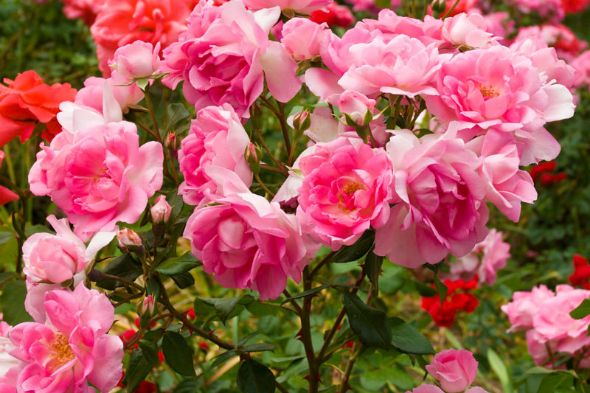
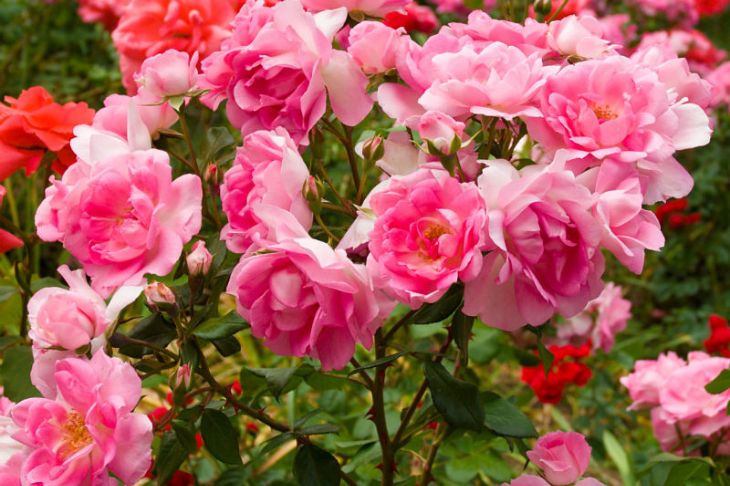
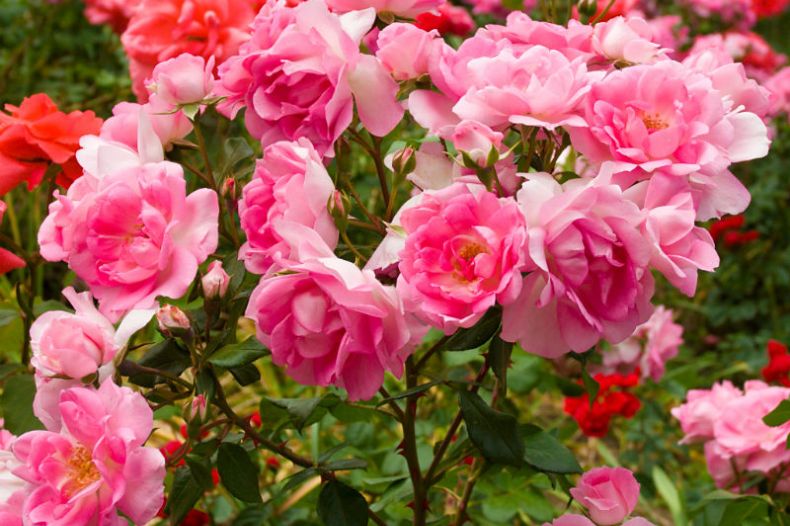
Sunny yellow flowers that love the heat! This amazing rose bears lavish clusters of large yellow flowers. The yellow flowers complement every garden or landscape! From the breeder of Knock Out®, this rose is especially heat tolerant and pumps out the blooms during the hottest summers--so when heat sensitive plants are stressing out, your Carefree Sunshine™ roses will be shining through. This product may be covered by one or more of the following patents. U.S.P.P. #13063
Plants grown in a greenhouse must be acclimated carefully before planting or placing them outdoors. This is especially true in hot or sunny locations. Many species should never be grown in full sun. Before purchasing a plant, learn about its sun requirements. Knowing the plants requirements can avoid any damage to the plant by incorrectly giving it the wrong conditions.
If your plant has been grown in a greenhouse, here are a few steps we recommend you follow:
These are general guide recommendations. Some plants take longer than others to acclimate.
The best way to succeed is to plan before you plant. Let’s discuss location: Do you know where you want your new plants to be located? Avoid many future problems by considering all aspects of the planting spot, such as:
Your plant would love a sunny place with well-drained, fertile soil. But it will be quite satisfied with six to eight hours of sunlight. Good drainage is required to keep your plant “happy.” If your soil has high clay content, use our Coco-Fiber Potting Medium or add one-third peat to the soil at planting time. We do not recommend planting in heavy, pure clay soils.
Once you’ve found out about growing firsthand, you’ll want to expand your home orchard. It’s important to plan so that the future growth areas will be ready when you are.
Few flowers are as desired as the rose. Their versatile beauty and fragrance have inspired poets and gardeners alike, and for good reason! Follow these simple guidelines for planting to give your new rose the best foundation possible.
Spacing of rose plants will vary by type:
Preparing your soil before you plant will greatly improve your plant’s performance and promote healthy, vigorous growth. It is a good idea to have your soil tested to determine if it is lacking in any essential minerals and nutrients. This can be done through your County Extension Office or with one of our digital meters.
The goal of soil preparation is to replenish vital minerals and nutrients, as well as break up and loosen any compacted soil.
Soil preparation can be done at any time that the ground is not too wet or frozen. Your trees may be planted even when temperatures are quite cool. If a hard frost is expected, it is advisable to delay planting for a while until temperatures become more moderate. Generally, as long as your soil is workable, it is fine to plant.
Your lawn can provide you with ideal organic materials such as grass clippings and shredded leaves. Not only will the grass and leaves break down to provide soil nutrients, but they will help loosen the soil as well. You can gather these in the fall with spring planting in mind.
Adding organic materials, such as our Coco-Fiber Potting Medium and compost will improve most every soil type. Organic materials bind sandy soil particles so they retain moisture and nutrients better. They also break apart clay and silt particles, so that water can infiltrate and roots can spread.
For best results, fertilize with Mills Magic Rose® Mix in late March, April and June. Apply the fertilizer around the base of the plant. The mix should be worked uniformly into the soil within the area of the drip line, then water thoroughly.
Every rose has the future potential for disease and insect damage. Factors such as location and weather will play a part in which issues your tree encounters. Disease-resistant roses are the best option for easy care; and for all rose plants, proper maintenance (such as watering, fertilizing, pruning, spraying, weeding, and fall cleanup) can help keep most insects and diseases at bay.
They are the size of a pinhead vary in color depending on the species. Cluster on stems and under leaves, sucking plant juices. Leaves then curl, thicken, yellow and die. Produce large amounts of a liquid waste called “honeydew”. Aphid sticky residue becomes growth media for sooty mold.
Natural Control
Chemical Control
Scales usually appear in clusters and are 1/8-inch long, color varies from white, gray or brown with crusty shells. Round or oval masses appear on stems and canes. Foliage wilts, turns yellow and drops from the plant. Growth is stunted and flowers are not produced.
Natural Control
Chemical Control
Disease causing defoliation and black spots on leaves and thrives in moist conditions. Twigs may also be infected. Black spots are circular with fringed margins, if severe, spots can combine to cause a large black mass, can weaken and kill plants.
Natural Control
Chemical Control
Whitish-gray powdery mold or felt like patches on buds, young leaves and twigs. Leaves may crinkle and curl upward. New shoots are stunted.
Natural Control
Chemical Control
Plants appear stunted and slow growing; leaves may be reduced in size and few buds are produced. Round growths appear at the base of the plant around 2 inches in diameter. They first appear light green and turn brown and woody as they age.
Natural Control
Chemical Control
Infection begins in spring and produces orange stage of disease and is occasionally found on new spears. Appears as small raised spot, yellow or pale orange, in concentric ring pattern. Spores are airborne to new growth where brick red pustules are formed on all parts. May turn yellow or brown, defoliate and die back. In fall the spores turn black and will over winter. Rust causes reduced plant vigor and reduced yields.
Natural Control
Chemical Control
Pinpoint size, many different colors. Found on undersides of leaves. Severe infestations have some silken webbing. Sap feeding causes bronzing of leaves.
Natural Control
Chemical Control
Small red, brown or purple spots develop on leaves. Center of spots dry out and fall out of the leaves and leaf eventually turns yellow and falls from plant.
Natural Control
Chemical Control
Also called gray mold spreads in moist air and cool conditions. Rosebuds fail to open and are covered with a grayish brown fuzzy mold. Open flowers are speckled with yellow or brown dots and lower petals are wilted and brown. The stems below infected flowers become discolored.
Natural Control
Chemical Control
Various colors and similar to aphids this small, active, slender-winged insects are usually found on the underside of leaves. Retard growth, leaves become whitened, stippled or mottled. Tips may wither and die. This insect carries virus of certain very harmful plant diseases.
Natural Control
Chemical Control
Tiny, slender, fringed wing insects ranging from 1/25 to 1/8” long. Nymphs are pale yellow and highly active and adults are usually black or yellow-brown, but may have red, black or white markings. Feed on large variety of plants by puncturing them and sucking up the contents. Leaves and petals will have brown streaks and buds and flowers will be deformed.
Natural Control
Chemical Control
Purple to red or brown irregular spots appear on young leaves with whitish to gray downy spots on the underside of leaves. Usually occurring in cool, moist spring conditions. Over-winters on fallen leaves, so fall clean up is vital.
Natural Control
These fungi cause circular, or angular spots, variable in size having beige centers surrounded by a red zone. When affected tissue dies, it may drop out, leaving large ragged holes in the foliage. Fungi overwinter in infected plant debris and in infected propagation stock.
Natural Control
Chemical Control
Small bees that vary in color cut holes near the edges of leaves. Usually make their nest in dead twigs that accumulate, using the leaf tissue to line the nest and cap their egg cells. Remove dead twigs and other debris and cut out dead stems.
Control
Appears as sunken area on canes, yellow, red or brown in color. May have purple margin around area. Leaves are sometimes spotted yellow or wilting and stems may die back. Can occur throughout the year but usually during humid, wet weather.
Natural Control
Appear as pale green worms with large brown head, around ¾ inch long. They feed on the surface of the leaves leaving small holes between the veins with remaining tissue turning brown. Eventually entire leaf may be chewed except for the main vein.
Natural Control
Pruning your rose plants can provide several benefits: improved flower quality, better plant health, and shaping/size maintenance.
Shrub roses have numerous canes with either small, single flowers or clusters developing on the canes' end and side branches. Some varieties only bloom once, and others are repeat bloomers. Pruning should be done annually while the plant is still in dormancy— in early spring before new growth, usually February or March.
Spraying is important to the survival of your roses. To handle potential diseases and pests, reference the guidelines below to know what you should spray, and when you should use it.
Before you begin, read and follow all instructions on labels.
Roses need about one inch of water per week. If rainfall is insufficient, soak the soil to a depth of 12” from soil level. The best way to do this is to let your garden hose trickle slowly. This gives the water a chance to soak in instead of running off. You can also use a soaker hose to water several plants at once. Avoid spraying water on leaves.
Roses can easily die from the cold, drying winter winds, sudden changes between freezing and thawing, and from freezing injuries to the bud union. Here are some general guidelines you want to follow when preparing your roses for winter:
Trees that are shipped without soil to ensure good contact with soil in your yard. When shipped, they are about 3-4' tall with 3/8" or larger trunk diameter. When they mature, they will be one of three sizes*:
Matures to be about 8-10' tall and wide. Provides an abundance of full-size fruit.
Matures to be about 12-15' tall and wide. Gives maximum fruit yield per square foot.
Matures to be about 15-25' tall and 20' wide. A multi-purpose fruit and shade tree.
Top-grade, bare-root trees that give you a head start on growing. When shipped, they are about 4-5' tall with 5/8" or larger trunk diameter.
Trees in bottomless pots that allow some roots to be air pruned, so that a dense mass of productive, feeder roots can grow within the pot to make transplanting easier. Mature sizes vary. When shipped, they are about 1-2' tall.
Top-grade, potted trees chosen to give you a head start on growing. When shipped to you, they are about 3-4' tall.
*Tree sizes may vary by variety. See our Growing Guide for details.
Since 1816, Stark Bro's has promised to please customers with the very best fruit trees and landscaping products, no matter what. It's just that simple. If for any reason you are not completely satisfied with your purchase, let us know within a year of delivery and we will send you a free one-time replacement or refund your full purchase price if you don't want a replacement. To receive your replacement or refund, please call 800.325.4180. This warranty gives you specific rights, and you may also have other rights, which vary from state to state.