
Fruit Tree Care: Pre-Pruning
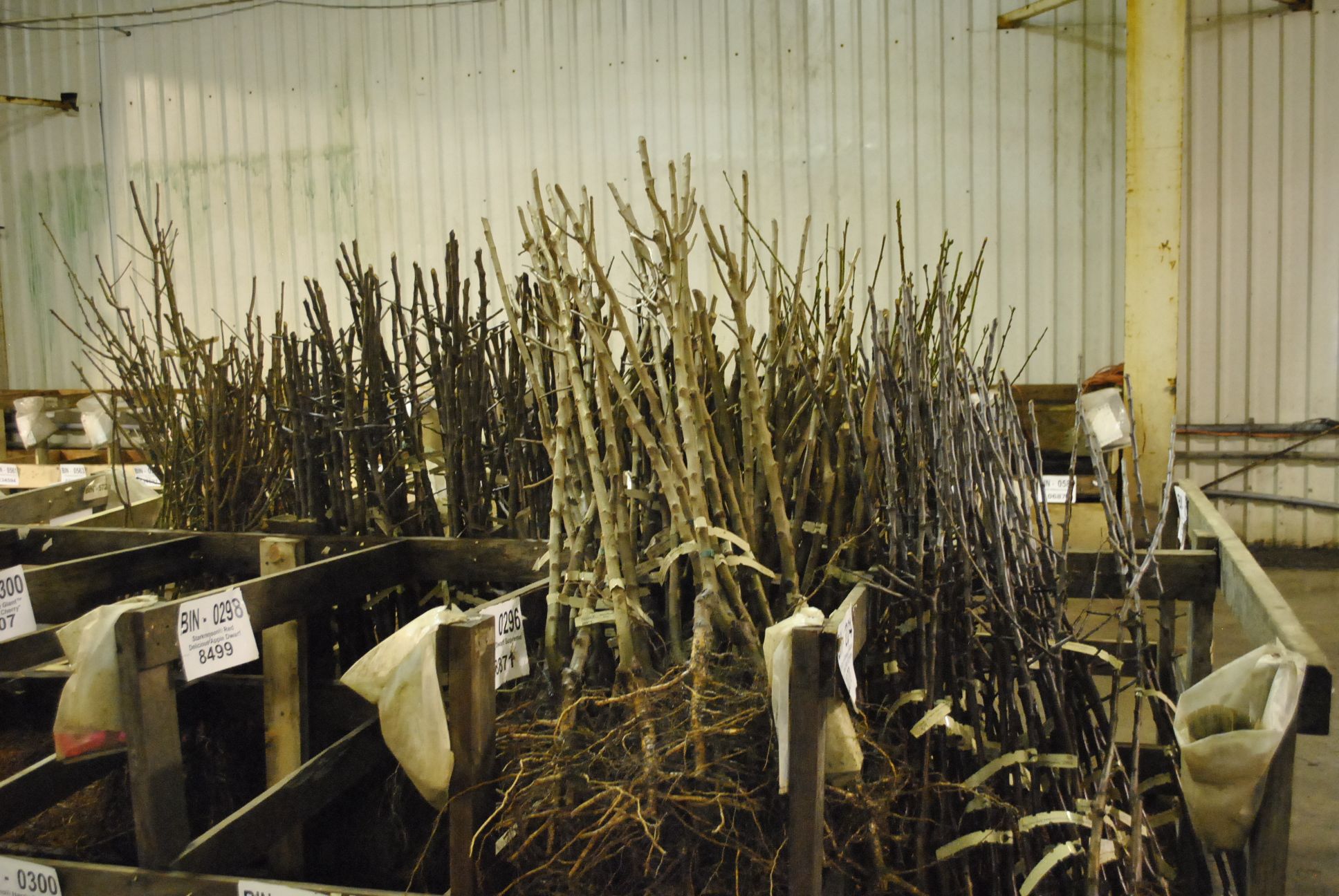
There are three basic reasons for pruning fruit trees: survival, stimulation & shaping. In this article, pruning for survival and stimulation are discussed.
I reflect back to a younger man 20 years old with a 110-tree orchard and his difficulty in cutting off limbs in a newly planted orchard for the very first time. This article goes beyond that small orchard; it involves years of lining out and pre-pruning thousands of trees.
Pruning at planting time is probably the hardest thing for the home fruit grower to do; yet to get fruit trees off to the right start, experts will tell you it's absolutely necessary! Many home growers fear that pruning will either hurt their tree or give it a substantial setback in size, delaying the first fruit crop. Nothing could be further from the truth. If you don't take advantage of this initial pruning, the drain on the tree's reserve system create more negatives than positives when it comes to fruiting in the future.
There are three basic reasons for pruning fruit trees:
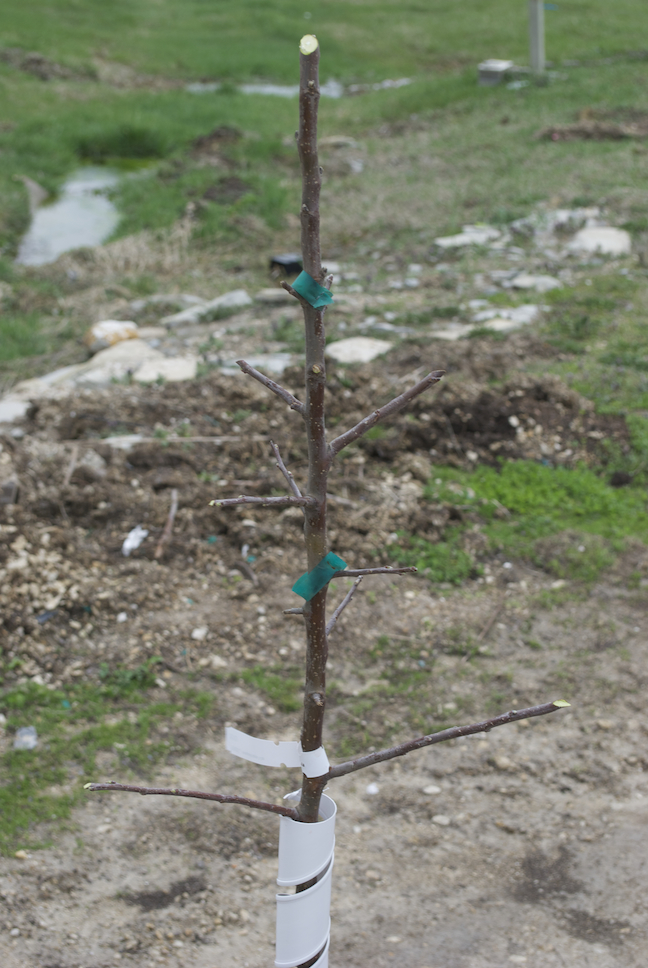
- Survival
- Stimulation
- Shaping
Here, I'll address the first two, since they are the most important for new fruit trees, and they're why we pre-prune our bare-root trees before shipping:
1. Survival
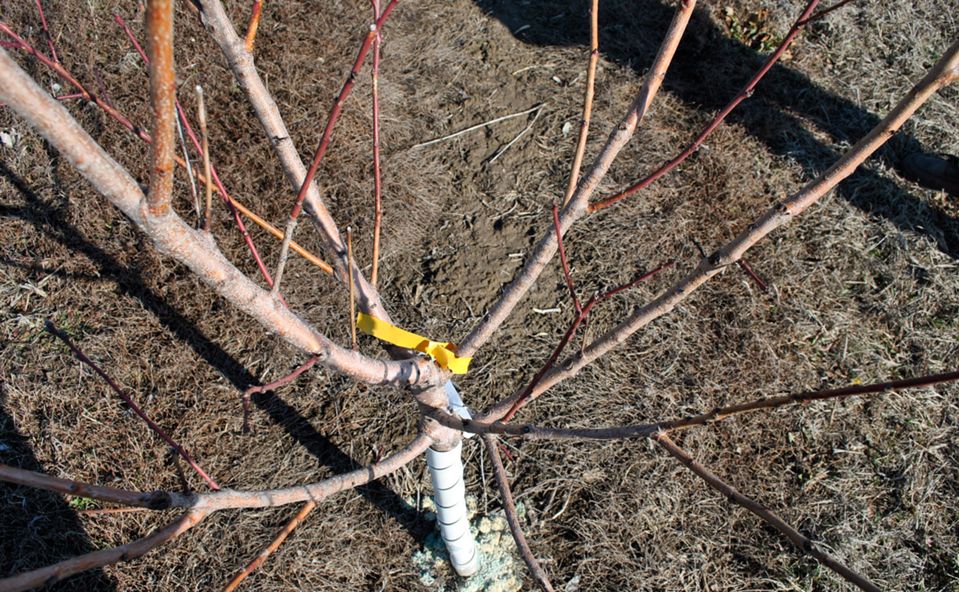
If we could see beneath the ground, we would see activity that parallels what's going on above. When you prune at planting time, you cut the tree back to its substantial wood, giving the root system less surface area to feed and much-needed time to establish in the soil. This is important because, during the digging and handling process prior to transplant, bare root trees lose some of their tiny feeder roots — these are the roots that absorb moisture and nutrients. If the top part of the tree is not pruned back to compensate for the lost roots, an imbalance may occur, causing the tree to put out weak, impeded growth.
2. Stimulation
By pre-pruning before planting, you give your trees the strength to survive transplantation. Pre-pruning will also stimulate stronger, more vigorous growth from the remaining buds on your tree. Usually after a single growing season, a pruned tree will equal or exceed a matching unpruned tree.
This first step of pre-pruning is one of the most important decisions in the life of your fruit tree.
3. Shaping
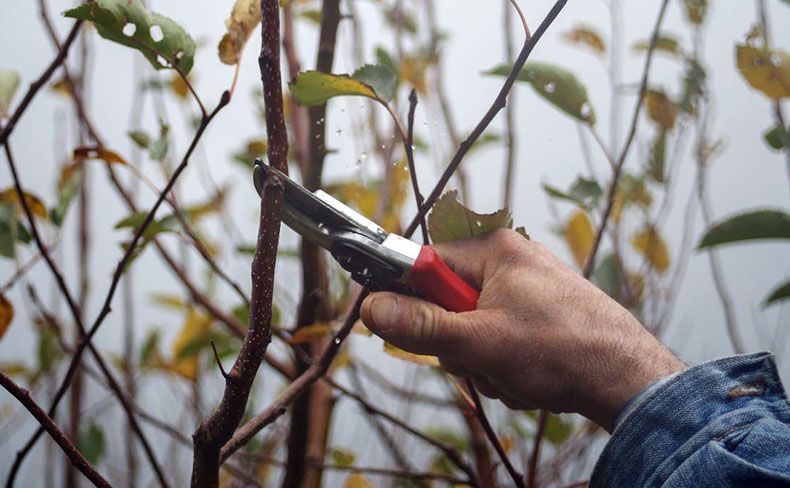
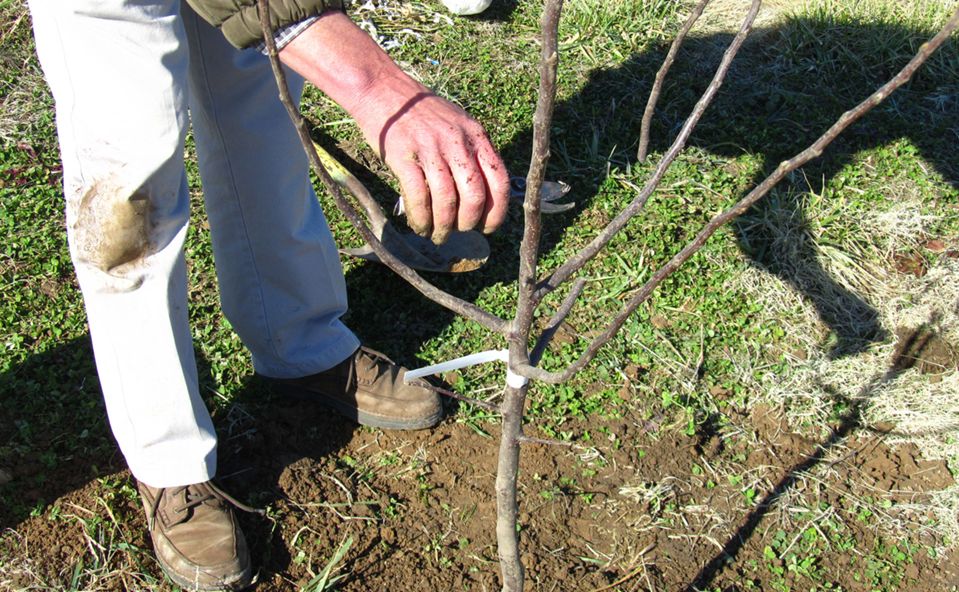
Shaping keeps your trees strong enough to support future fruit production. The ideal structure depends on the type of fruit trees you're growing, but pruning to the proper structure for each tree is simple once you know what to aim for.
Learn more about shaping your trees in the following articles:
At Stark Bro's
During one of our staff meetings, we decided to prune all of our bare-root fruit trees before we ship them. Making decisions like this can be difficult, especially when it adds cost to the company, not to mention the additional work.
Stark Bro's used to provide this pruning service for a small fee; but as the grower, we take great pride in how our trees perform for our customers. So we’ve decided to take a proactive step forward and pre-prune, by hand, every bare-root fruit tree we ship to you. It's another way for us to invest in the success of your fruit-bearing endeavors, and we’re confident you will see the positive results when planting these pre-pruned trees.
— Elmer Kidd, Stark Bro's Chief Production Officer (retired)
Learn More About Why We Pre-Prune New Trees
Latest Articles
 The Healing Power of Your Garden: Growing Plants for Apothecary and Wellness
Why You Can’t Eat Raw Elderberries (and How to Enjoy Them Safely)
When to Pick Asian Pears: Harvesting Tips for Crisp, Juicy Fruit
Summer Raspberry Pruning Tips with Matt Lebon of The Foodscaper
Backyard Orchard Tour: Growing Fruit in Small Spaces with Stark Bro’s Team Member Katie B
How To Prune Grapes - Summer Care
How to Make Redbud Jelly
Winter Preparation for Fig Trees: Cutting Back and Mulching
Indoor Gardening with Purpose: Fresh Ingredients Year-Round
The Healing Power of Your Garden: Growing Plants for Apothecary and Wellness
Why You Can’t Eat Raw Elderberries (and How to Enjoy Them Safely)
When to Pick Asian Pears: Harvesting Tips for Crisp, Juicy Fruit
Summer Raspberry Pruning Tips with Matt Lebon of The Foodscaper
Backyard Orchard Tour: Growing Fruit in Small Spaces with Stark Bro’s Team Member Katie B
How To Prune Grapes - Summer Care
How to Make Redbud Jelly
Winter Preparation for Fig Trees: Cutting Back and Mulching
Indoor Gardening with Purpose: Fresh Ingredients Year-Round