My garden constantly changes. I move plants as if they were furniture, add new gardens and try new plants. Over time, I’ve found my success rate is a lot higher if I study plant options thoroughly before bringing new plants home. In anticipation of spring, I’ve been reading up on growing hardy kiwi. And lucky for me, I happen to know a farmer or two, and I was able to confirm a lot of what I read with a farmer who’s grown it.
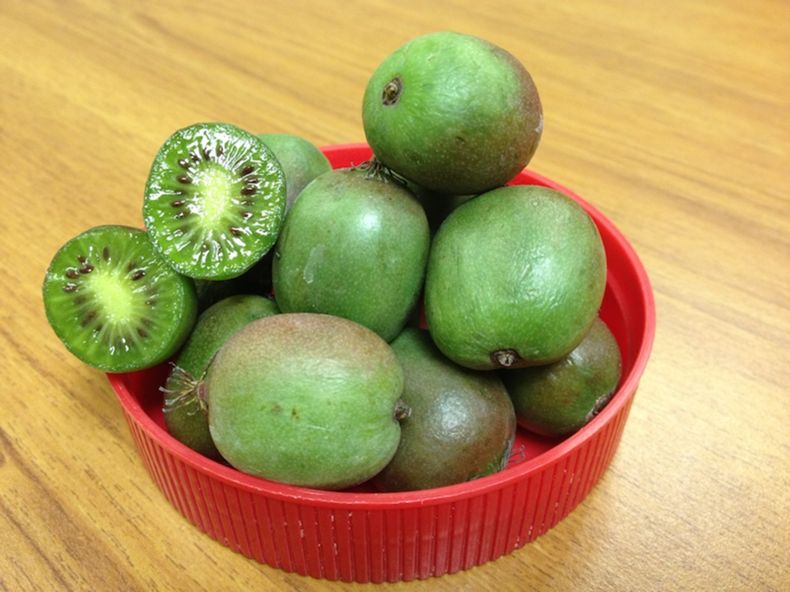
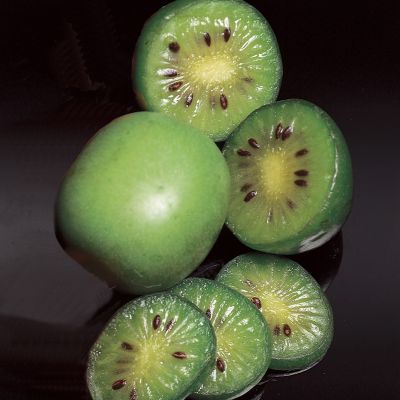
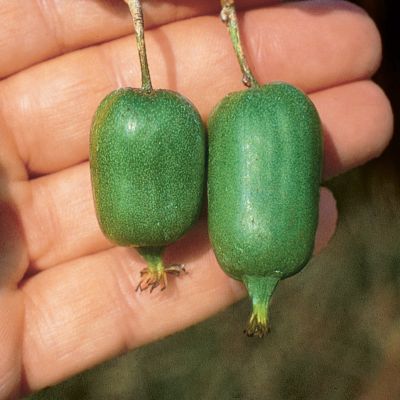
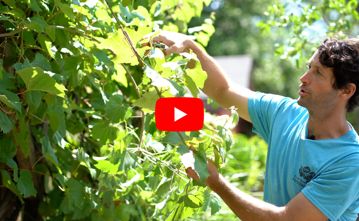
Compared to fruit we know from our grocery stores, hardy kiwi is a smooth-skinned, smaller and sweeter version of the kiwifruit. Hardy kiwi is a robust vine with pretty deep green leaves. Once established, the plant can outlive your mortgage, but it may take several years to mature before bearing fruit. Depending on the variety and age of the vine when you buy it, you’ll see fruit between 2 and 5 years. My farmer bud said the yield the first year will be less than following years. He also confirmed that while most varieties need both male and female plants to produce fruit, the ‘Issai’ Hardy Kiwi is self-pollinating. Issai also tends to bear fruit earlier than some varieties.

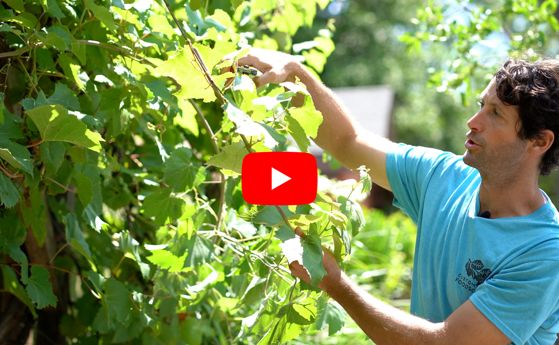
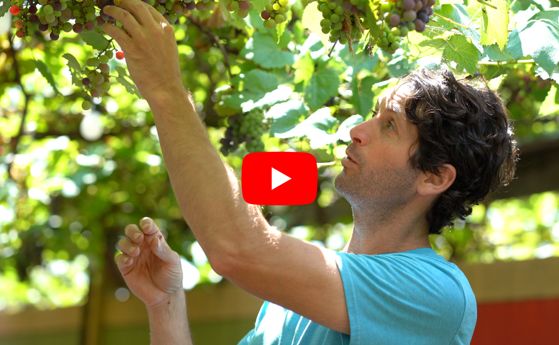
Hardy Kiwi via Joe Archie
As with most fruits, hardy kiwi likes full sun (at least six hours a day) and well-drained soil. About the only way to make a kiwi unhappy is to plant it in wet soil. Consistent moisture will help produce the best yield with the best flavor. Drought, early in the season, can cause blooms to drop and a prolonged dry spell in late summer can cause the fruit to fall before it is fully ripened. Mulching will help hold moisture in the soil and keep down weeds.
Like grapes, kiwi vines need support. Start out by growing the vine vertically with stakes. The vine grows rapidly, between 10 and 20 feet per season, so it can quickly cover an arbor or a pergola. You can also build a ‘T’ shaped structure. For easy harvesting, consider growing the kiwi 6 or more feet off the ground. Once the Kiwi reaches the top, train the vine to grow horizontally. Create a trunk by trimming off the lateral branches on the vertical section toward the end of the first season.
Fruits will reach full-size by mid-season, but will not fully ripen until late in the growing season. They will keep longer if picked just slightly before fully ripe and refrigerated. Hardy kiwi will ripen on a counter or windowsill.
Truly a multi-tasking plant – producing fruit and looking good doing so – hardy kiwi is a perfect addition to the home garden as we transform our yards from attractive to both pretty and useful.
Laura is a garden writer and photographer. She writes online content for gardening websites, writes for gardening publications and blogs for three gardening blogs. Her interests are local food, organic gardening, backyard homesteading and native plants. She assists gardening related clients with social media. And occasionally, she’ll offer a solicited opinion as a garden coach.

You may read more from Laura on the Punk Rock Gardens Blog and the Proven Winners Blog and connect with her on Twitter.
It would have been helpful IF the author had mentioned what “Zones” this hardy-kiwi could be grown in. Also helpful would be some indication of whether this plant can be grown-from-seed OR must be started with a healthy seedling/plant.
Without this information, the other information is useless.
Hi Carl. The Issai Hardy Kiwi, as mentioned on our website, grows in these Recommended Hardiness Zones: 5-9.
We wrote a post recently on the benefits of rooted cuttings/grafts/cloning versus growing from seed: The Science of Grafting.
Thanks for your comments.
Carl, the information is not useless just because it did not answer all of your questions at once. Heaven forbid you have to read the description in the catalog. A little bit of “please” and “thank you” still goes a long way, even when on the internet.
It would have been nice if you had told us just what HARDY means… to 32°? …. to -25°? ….uh, “hardy” to what temperature? Not much point to the article without that key knowledge
Hello, Jim. The Issai Hardy Kiwi, as mentioned on our website, states that it is Recommended for Hardiness Zones 5-9. If you need to know if this is recommended for you in your zone, you can enter your zip code on that same page for the Hardy Kiwi and a check mark will appear next to the recommended zones if it is recommended for you there.
The minimum hardiness zone for this particular plant is 5 which, according to the USDA Plant Hardiness Zone Map, tolerates temperatures from -10 to -20ºF.
I don’t know what variety of kiwis I have, but they do produce fruit. The problem is that when the fruit is about the size of a large pea…it just vanishes! I have no idea what could be getting it. I hesitate to net the vine because I know I’ll never be able to untangle it once I put it on the vines!
One year I did see a swarm of tiny flies,(like fruit flies, but smaller)..so I sprayed with dormant oil the following season..it didn’t help at all. Any ideas? Thanks, Donna
Hi there, Donna. It’s difficult to diagnose if we don’t really know who the culprit is making your kiwi fruit disappear. Chances are it’s a critter (birds, squirrels, etc.) because insects don’t typically consume all evidence of all fruit. Netting would be a good way to protect the fruit from birds and squirrels, and your local garden center may even carry a garden fabric that would be less prone to tangling with your vines. It would provide protection from birds, insects, and even provide insulation in chilly temperatures. I would definitely recommend looking into that to protect your kiwi!
What variety of Kiwi do you have, Donna? My book tells me that you need one male plant in the mix for proper pollination. If you do not have the Issai Hardy Kiwi, which is self pollinating, maybe that could be your problem.
Although root hardy to zone 4, once they break dormancy hardy kiwis are extremely sensitive to frost. Even the lightest of frosts will kill back the young shoots and flowers resulting in no fruit. They do well in microclimates favorable to grape cultivation. Don’t bother planting if your location is subject to late frosts
This is very true. New growth and blooms are sensitive to frost across many species of plant. Your advice is sound! Thank you, Lower_Ashland.
I will look into a garden fabric for them…thank you! I knew there had to be a solution! By garden fabric…I think you mean those white sheet type things that they call floating row covers? Or is it something different?Thanks for the help…I really can’t wait to have kiwi! Donna
Donna, that’s right, the garden fabric is also called “floating row covers” or even simply “row covers”. If your local garden center is confused by the name, they will most likely know what you need if you describe your issue with birds and pests.
Note Lower_Ashland’s suggestion as well, if the fruit isn’t disappearing but is simply dropping below, that may be the culprit!
Donna,
Premature fruit drop in hardy kiwis is usually the result of poor pollenation. The fruit forms but aborts before it reaches maturity.
Thank you for your input Lower_Ashland! That would be a good explanation for fruit not staying on the vines.
Thank you, Ashland and Sarah. I am pretty sure the fruit is not dropping, as I watched it very closely when it started to develop..I looked for any sign of it on the ground and there was none, so Sarah was probably right when she suggested a squirrel or bird. I will try the floating row cover, and keep my fingers crossed! Thanks…Donna
There is a possibility that the fruit is a variety that requires pollination, receives none and drops, then is eaten by critters of some sort.
Russ, you’re correct. That can happen if pollination is unsatisfactory. The vine may also try to overbear and, if there are not enough nutrients being taken from the soil or photosynthesized through the leaves, fruit-drop may occur.
I read in a book that kiwi require a considerable amount of water. Is that also true for Hardy Kiwi? Can Hardy Kiwi thrive with summer afternoon humidities of under 10%?
Thanks.
Hello, John! What you may have read is that the Issai Hardy Kiwi is tolerant/forgiving of water. It doesn’t require a tropical environment by any means but if you happen to have a location that gets a lot of rain it won’t be detrimental to the plant/roots.
In drought/dry conditions, however, you will need to be sure the kiwi is getting enough water. I’m not sure if your afternoon humidities of under 10% mean it’s not raining, too, but it would be best to ensure the soil doesn’t become overly dry around the roots.
I love Kiwi, especially with sliced strawberries. I wonder if I can grow it in Georgia clay. My yard is almost all clay and I have lost a lot of plants due to its
properties. Maybe I will try one and get lucky.
You’re making me hungry, Linda!
Since the Issai Hardy Kiwi is tolerant of water, it may not be too sensitive to growing in Georgia clay.
You should consider amending your soil with something like Coco-Fiber Potting Medium to break up heavy clay allowing the roots, of plants and trees you try to grow, to spread.
I can attest to the Hardy Kiwi being HARDY. I have kind of abused my plant for a couple of years, Planting it in a pot and against a back fence behind my shed. Most times it never gets water in the hot sun. I kept forgetting about it. Last year I cut most of it off the fence and moved the pot, thinking it was almost winter, and I must have killed it by now.
Surprise ! It is greening out and I guess I will water it and give it a better spot to grow on my fence. This time I will plant it in the ground. No fruit, but I did not give it a chance to live let alone produce. Time I respect it, it is hardy and wants to live !
Thank you for sharing your experience with the hardy kiwi, Sandy! It makes me feel better about my current situation: I have one in a pot in my windowsill because I don’t have a spot in my yard for it yet. It has practiced its vining by climbing the cord for the blinds, though.
Sandy…you do know that you need 2 plants, right? You need a male and a female before you will get fruit..one plant won’t do it, unless you have others already planted.
Thanks for your concern for Sandy’s fruit production, Donna!
The Issai Hardy Kiwi is actually self-pollinating and does not require a male and female plant to produce fruit. Additionally, the Issai Hardy Kiwi is often used as a pollinator for other kiwi vines that require one for fruit production.
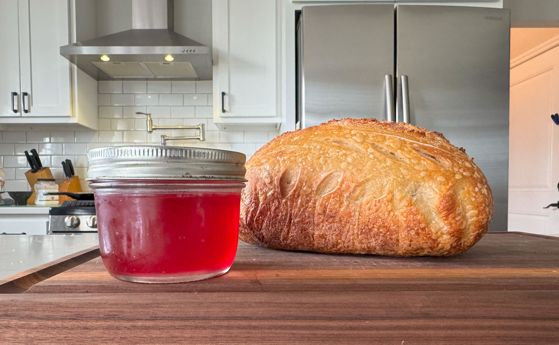
Do you have any recipes for canning this fruit?
Nancy, I don’t have any (I could probably do an internet search since I’m curious now) – I encourage anyone reading to post recipes and canning information if they have it, though!
I have a question about the Issa Hardy. I bought one (along with some blueberries, raspberries and 2 paw paws) for fall planting last year. The plant is in the ground, but I am worried since it seems to have succumbed to the cold and snow. Am I just being over-protective? Will the plant return from dormant roots this spring? Thank you for your help.
The same thing happened to the young Issai Hardy Kiwi vine I planted in the fall, Javier, but it sprouted right back once it became warm again in the spring. If yours doesn’t come back this spring, give our customer support team a call [800.325.4180] and we should be able to look into replacing it for you.
Thank you, Sarah. I grew up in a warm climate and still panic when I see a plant “die” (aka go dormant) for the winter.
It must be a warm-climate native thing, because I am the same way! I don’t know if I’ll really get used to it. Trees are one thing, but the tender leafy things like the young kiwi vines… I don’t give them enough credit, I think.
Sarah, you are awesome at answering all these questions. Fabulous customer service!!
Why thank you, Kelli! I do my best
Sarah, I bought a male and female “anna” arguta from a well known nursery just south of Seattle. The female has struggled due to Idaho’s nearly predictable late spring frosts, the “male” has surprisingly thrived and is now in its 5th year. Today I noticed the “male” for the first time has a few fruits! The female never had blossoms and remains pretty small. I’m curious as to whether the “male” was mislabeled and got pollenated by some other fruit tree or this is weak attempt at self-pollenation. Your thoughts?
That’s wild, Mike! I’m willing to bet it’s either that the “male” was mislabeled (maybe your male and female got switched?), or the variety is actually partially self-fertile there. Kiwi needs to be pollinated by another kiwi, so, unless someone around you also has kiwi vines growing, the neighboring fruit trees weren’t helping your fruitful kiwi out.