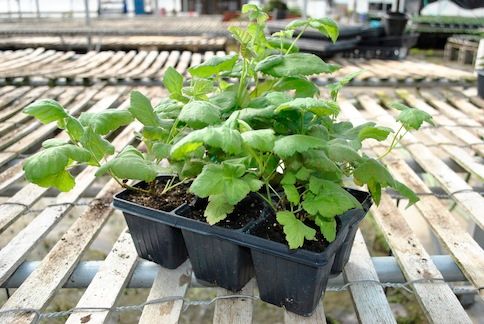
In fall or spring, planting trees and plants can be an invigorating adventure. When your Stark Bro’s order arrives, it’s best to be prepared to plant your new additions within a day or so. We understand, however, that sometimes you’re simply not ready to put them in the ground right away. In this article, we focus on some ways you can safely delay planting for many different trees and plants.
Bare-Root Trees
When you open this package, you will see strips of damp paper around the bare-root tree’s roots. Make sure the paper remains damp, but avoid drenching it. Wrap the tree in its shipping plastic, and store it in a cool, dark place, like an unheated basement, cellar, garage or shed. It is ideal to store the tree at a temperature of 40ºF, but anything under 60ºF should work for a short period of time. This method will help you delay planting for up to a week.
If planting must be delayed for more than 10 days, “heel in” your trees outdoors. To do this, start by digging a sloping trench long and wide enough to hold the roots. Lay the tree in this trench, with the roots against the steep side. Then, cover the roots with soil, and soak with water. As soon as possible, plant this tree in its permanent location as you normally would.
Small Bare-Root Plants
Some berries and other small bare-root plants can be stored in the lower section of your refrigerator or in the “crisper” drawer. Do not store them with fruits and vegetables unless your plants are completely sealed in plastic (in gallon-sized re-sealable bags, for example). To be extra cautious, you can double-bag your plants in the airtight plastic. Doing so will help you to avoid exposing your plants to the often lethal (to living plants) gases that are naturally given off by produce in your refrigerator.
Potted Plants and Trees
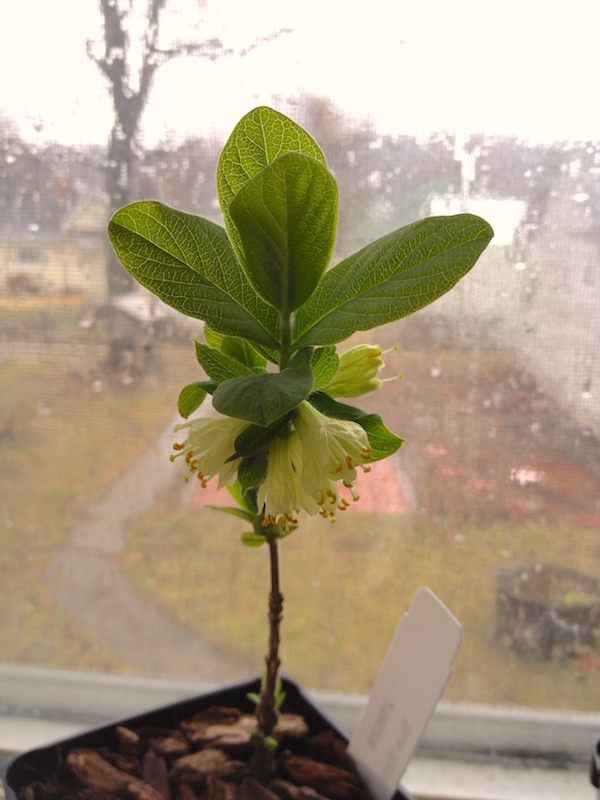
Plants and trees that arrive in temporary containers, like our exclusive EZ Start® Pots, should be treated like houseplants until the outdoor soil warms. Water them occasionally, when the soil appears dry, and keep them in a cool, dark place to encourage dormancy, especially in the fall. When planting time comes, these potted trees and plants will need to be gradually acclimatized (slowly reintroduced) to outdoor temperatures prior to planting in the ground. Doing so will help you to avoid shock and help to ensure the transplanting will be more successful.
If snowfall arrives or freezing temperatures set in when your order arrives, don’t panic! Just follow these simple suggestions:
If your order arrives in the spring, you might find that your soil may be frozen or otherwise unworkable. If this is the case, you should keep your tree or plant in the package until the daily temperatures are above freezing and the ground thaws. Please note: you may plant, even if the low temperatures are in the high teens, as long as the daytime temperatures are near 40ºF. You can delay planting for up to two or three weeks if you are able to keep the roots from drying out. However, in cases where the delayed period is longer than a week, you should consider applying additional damp paper to bare-root tree roots to provide sufficient enough moisture for longer storage.
There’s no need to worry if you’re not ready to plant right away. If you are facing inclement weather or other unforeseen problems, you can feel confident in your ability to safely store trees and plants for a short period of time until you’re ready to put them in the ground.
What are some methods you’ve used when you’ve had to put off planting?
http://www.starkbros.com/blog/wp-content/uploads/2012/11/rowsofEZStart1.jpg
Topics → Planting & Growing, Tips
20% off offer valid for orders placed between June 2, 2012 and August 31, 2012 11:59 (CDT) for fall 2012 and spring 2013 delivery only. Discount reflected at checkout. Free shipping offer valid with orders having a merchandise total of $75 or more. Free shipping not available to Alaska shipping locations. Free shipping offer only valid with FedEx Home Delivery shipping method.

Thanks I will be ready to plant my trees. Monday 11/12/2012
Thanks again Gary
That’s great, Gary! What will you be planting this fall?
CONCORD GRAPE, CAN I PLANT THEM NOW ,AN HOW SHOULD I COVER AN WATER THEM. OR CAN I
Gary, you should be able to plant your Concord Grapes as soon as they arrive! The plants will be dormant for the winter, so if winters can be a little harsh in your area, you can cover your new plants with something that works to insulate them, like straw. You should water at planting time but, while they are dormant throughout the fall and winter, your plants will not need frequent watering. If it snows there, the excess moisture will help to give your outdoor plants the water they might need!
Received my berry plants 11-08-12 in the AM, had them in the ground 4 hrs later.
That sounds perfect, Larry! Feel free to share any photos of your berry plants with us when they really start growing this spring.
I should be ready to plant when they arrive. I have a question though. I just moved and plan on transplanting the 2 apple, 1 pear, and 1 peach tree that I got from you last fall. Do I need to wait until all of the leaves to fall of for a safe time?
For the best chance at the least amount of shock to your trees, we recommend doing any necessary transplanting while the trees are completely dormant. Usually, once all the leaves have fallen, you can start preparing to move them to their new location. Another thing you will want to do is avoid breaking up the fine feeder roots when you move the trees. Try to keep as much of the root system intact as possible.
Thanks for the tips, we are planting this fall as soon as the tree arrives
That sounds great, Doug.
What kind of tree are you going to be planting this fall?
i am ready to plant my cherry tree any time roger
Great, Roger! Did you choose a sweet cherry (great for fresh-eating but also cooking) or a pie cherry (ideal for making pies, sauces, and other tasty treats)?
I planted my cherry trees today. The temperature here in Northwest Missouri was in the 70′s. If the weather stays warm, will the trees try to bud up or leaf out? Is there danger to them if they do? Thanks.
Fortunately, Lynn, the warm weather only lasted a day or two and it will not trigger your new trees into waking up or thinking it’s spring.
That can happen, though, if the warm weather lasts for several weeks like it did this past spring. Many fruit tree growers, Stark Bro’s included, had their trees waking up early and then they were hit with late frosts. The danger was that the frosts zapped the blossoms and young fruit, meaning not much fruit was produced this year. Fortunately, this is not a permanent thing — just a disappointment. If this ever happens with your mature fruiting trees, take comfort in knowing you can look forward to fruit production the following year!
No problem here. Ground is still warm When plants arrive we will be in the 70′s. Ground is ready for the plants. I will be able to plant the day of arrival
That sounds like ideal planting weather for you, Michael! Glad to hear it. When do your colder, winter temperatures start settling in for you there?
I received my mimosa tree on 11/13/2012. I moved the tree in a dark, cool (60-ish) spot in the basement until I can plant it this weekend.
Last weekend it was in the 60′s in Southwest Ohio, but this week it’s been dropping down to the upper 20′s at night, 40′s during the day. Will moving the tree from indoors to planting it in the cold ground shock it, or should I move it to the unheated garage, then outdoors as the temperature rises past freezing to acclimate it, or am I okay just digging a hole and planting it?
As long as the tree is dormant (no leaves is a good sign) you should have no problem planting directly into your yard now even with the temperatures at what they are. Just be sure to plant during the day (temps in the 40s, like you mentioned, is fine) so that the roots aren’t exposed to freezing temperatures at planting time.
If your tree still has leaves on it, John, you might be better off storing it temporarily in the unheated garage and then transplanting it into its permanent home in your yard once it has gone completely dormant. This will help to avoid shock to a tree that is still awake.
I got all my trees in the ground the night they arrived…had the holes pre-dug and planted them in the dark…I’m so excited for spring to see how they’ve taken. Is there some obvious markers to look for if I screwed up and my tree is dead versus it’s taken to growing and I’m doing OK? I was nervous putting them in the ground in November…but you guys are the experts!
You sound like you were really prepared for planting this fall, Rich! Even if it happened in November. Your trees were dormant when they arrived, so you won’t see any obvious signs of life until the spring — when their buds start swelling and when they push new growth next year, you’ll see how well everything is doing for you!
I planted just after dark(as soon as I got home) but it was still above freezing when I did this. I’ve watered them a bit the last few days as it hasn’t rained since then. Hopefully I didn’t goof it up!
Thanks for the info! Stark Bros provided the trees my great frandfather planted the family orchard with 90 years ago so I’m pleased to have been able to order from you again! You’re support via email, articles, etc. has been great!
It sounds like you’re on the right track for having some healthy trees this spring.
Just keep in mind, dormant trees don’t require as much watering as they would if they were growing during the spring and summer.
We are delighted to be here to help you carry on your family’s tradition of growing your own fruit trees. Thank you so much!
Sarah,
I have my fingers crossed here. I prepared for apple trees and dug my holes in advance with the old addage of ” dig a 40 dollar hole for a 20 dollar tree”. So my holes are more than large enough. In clay soil,so I mixed in alittle peatmoss and compost and manure when trees were planted. But the soil was pretty saturated form rain and became a pretty muddy mess by the time we were finished. Will this be ok? If so should i put the reccomended 2″ of mulch orver the distrubed ground?
As long as the rain has let up since planting and the excess water is draining, your trees should be alright, Patrick. I would suggest leaving the mulch off until you can tell that the excess water has drained (it won’t be quite so muddy), because mulch helps to keep moisture in.
If the planting sites for your new trees are holding water for several hours, even with your amendments, you might want to find a different spot to plant; one that has better drainage. If this is the case, you can pre-dig the holes like you did before and (before planting your trees in them) try filling them with water to see how long it takes it to drain again. Cornell University has a nice resource on testing soil drainage here: http://www.gardening.cornell.edu/factsheets/misc/soilbasics.html
If everything looks good, go ahead an apply that mulch layer to keep those roots insulated for the winter!
I planted several fruit trees this spring, one of them was a nectarine tree. All seem to be doing well except the nectarine. For some reason I think the top part of the tree died off, the only part that seems to have any new growth is toward the bottom of the trunk. The new branches are above the graft, but still low on the tree close to the ground within the first 6-8″ or so. What if anything can i do to save this tree?
The fact that the tree is still growing above the graft is a good sign, Heather! I would recommend finding out for certain if the top portion of the tree has died. You can do this by scratching (with your thumb nail) a small spot on the main trunk of the tree (not a branch/limb) to find green/wet wood beneath the outer layer of bark. If that section is not living, the wood beneath your scratch mark will be dry, brown, and brittle. You may test this onward down the trunk until you find where there is still living wood.
When you find where the tree’s trunk still shows signs of life, simply take your pruners and trim back the main trunk of the tree, making sure to leave the portion that is still living.
This past growing season has been a harsh one, especially for new trees. This pruning may set the height of your tree back a bit, but it will give it a better chance at surviving, overall, and starting off strong this coming spring!
I just received rain today 11/26/12 and again for 11/27/12. A front is pushing through in Louisiana, Zone 8 weather got down to 30 degrees Saturday night 11/24/12 and back in the high 60′s today, monday 11/26/12. I ordered 2 cherries, 2 apples, 2 grapes and a nectarine tree. The soil here is a loam with clay. I’ve done perk test in several areas of my property which entails digging down 3 feet and filling them with water. The ground does not perk well even after a 24 hour period. I started a section digging out two foot down and adding peat moss into the soil to help it drain. once the soil is brought back to the top of the hole, do you think this will help the drainage and be enough for the dwarf trees. The area is about 5ft x 25 ft and I plan on placing the two cherries and nectarine their. Also due to drainage problems would you suggest that I raise the bed and what should I put in there to do it. My trees are being shippped on 11/28/12 and the soil will probably not be right to work.
Thanks for whatever help you can give on such short notice. I read the article on planting in clay soil and was starting my prep work until the rain came.
I’ve also read your article in reference if you can’t plant right away.
Help, short on time.
It sounds like you’re doing the right thing, working to improve the drainage of your soil before your trees are planted in it, Joseph. That being said, once you’ve finished amending the soil, testing for drainage once again will be the ultimate judge of the effectiveness of the amendments. I do think it will be to your benefit to provide a raised bed setting for your new trees as well, even if you improve the drainage of your soil a bit. It won’t hurt anything to be extra cautious in this case, and if your location is prone to flooding during heavy rains there, raised beds will help to avoid having your trees sitting in standing water for long periods of time.
I have recieved my fig trees which will be given as Christmas gifts. (Chicago Hardy). You explained how to winter them until spring planting, but could you please tell me again, as I want to pass this information on to those receiving the trees, and I want to get it right. One of the trees was broken at the tip. Should I just prune it below the break? Thank you. They are really packaged nicely and look really great. I am thinking they will be both be pot grown.
I think this article specifically about growing figs in containers might help you, Dorothy: Figs on Wheels.
If the tip of one of the trees is broken, you can prune just below the break to where the wood is not damaged. Your tree will be just fine!
Feel free to share any photos of your pot-grown fig trees with us when they’re planted. We’d love to add them to our Pinboard titled “Growing Your Own” with credit to you, to share your success with your fellow growers.
I am wanting to buy 2 dwarf peach trees and a dwarf honeycrisp apple and one other dwarf apple tree. I live in cincinnati Ohio, so when should I plant these tree. How tall are your dwarf fruit tree’s when I buy them. About how long will it take for the tree’s to get fruit on them.
Any help would be appreciated.
Jim
We’ll be shipping to your area around the second week of March, so you should be able to plant when your order arrives. After you’ve placed your order, you may request to delay your ship date if you fear the ground may still be frozen — just contact our customer support team [800.325.4180 | info@starkbros.com] with your order number if you need to request a later ship date.
The regular dwarf fruit trees will be bare-root, 3-4 ft tall, trees when they are shipped to you, and, if you opt for the Supreme-grade dwarf fruit trees, they will be bare-root, 4-5 ft tall, trees when you receive them.
You can find out how many years it takes to get fruit from the different types of fruit (and nut) tree in our blog post here: http://www.starkbros.com/blog/how-many-years/
I hope this all helps. Happy planting, Jim!
What would be the date range for planting fruit trees in Zone 7B – is mid-April too late?
Good question, Summer! We start shipping to your zone the last week in February this year — mid-April is getting to be a bit warm there but, as long as you’re planting before the end of May, you should be fine.
Great, thanks! I’ll just pray for a slightly cooler-than-usual spring until then.
Hello I just received 4 pecan trees from Stark in small containers and it has rained a bunch here in Georgia so I am worried about mud/dirt. Is it okay to use miracle grow potting soil to plant these trees?
thank you
Hi Stephen! You can wait a few days to plant your pecan trees if it’s too rainy/muddy to plant right now. It would be best to use top soil when you plant your pecan trees in the ground. Potting soil is usually a soil-less medium that is intended for container-dwelling plants.
okay thanks I will look for some commercial grade top soil. at least the rain makes it easier to dig the holes
Hello! I’m getting ready to place my first order with Stark Brothers. I will be ordering blueberries, raspberries, fruit trees, and probably a few others. Your website says they start shipping 3-11-13 but I won’t be ready to plant quite that soon. When is it to late to order for Spring planting? Thank you!!
Hi Dawn! When you place your order with Stark Bro’s, we ship when it’s the average-ideal time to plant in your area. You know your planting site best, so, if you can’t plant at the mid-March shipping date, simply give our customer support team a call [800.325.4180], before your order ships, so that we may adjust your shipping date to a better time for you.
It’s too late to order when: 1. the products you were looking for have become sold out, and 2. when we wrap up our spring shipping season, usually in late May/early June.
Some things to keep in mind: the later it gets in the season, the more likely it is for things to become sold out. Our current spring shipping promotion ends on April 15, 2013 as well.
Hello! I ordered and recieved 2 lingonberry plants in November. I live in zone 7a. I planted them in containers where they received indirect sunlight inside the winter . Now, they are not looking good at all. I am hoping they are still alive. Do you have any tips for caring for them at this stage? Can very tender looking plants go straight outside in containers during the winter? What are some tips for the plants suriving the summer heat and humidity of north Alabama? Thanks.
Hi Tim! Tender growth is the most susceptible to winter injury — even in hardy plant varieties — so it’s best not to put them straight outside if the weather is still wintery. You can gradually transition the plants to adjust to the different environment by slowly acclimatizing them. This involves moving them outdoors (in a protected area like a porch) for a couple of hours and bringing them back inside. Do this each day and gradually increase the amount of time spent outdoors for a week or so, and be sure not to leave them out over night or when it’s below freezing out.
When you water your plants in pots, be sure that the soil is dry to the touch, at the top inch or so, before watering again. If it’s still damp/moist, there is enough water still in the soil to satisfy the plants’ needs.
Lingonberries, as mentioned here, require a soil pH of 4.5-5.5. This is a soil acidity similar to the needs of blueberries and azaleas. My feeling is that, if the plants are not being overwatered, they are most likely not able to take in necessary soil nutrients because the soil pH isn’t quite right for them.
If you find that your potting mix’s pH is too high, you can mix in a Soil Acidifier, sphagnum-peat moss, coffee grounds, or any other soil amendments that will help to lower the pH of the soil and make it more acidic.
Be sure the soil in the area you decide to plant your lingonberry plants outdoors has the proper pH — before you plant — to allow them to grow healthily. While the lingonberry plants are growing outdoors in Alabama, you might want to either construct a temporary bit of shade for the summer months (shade cloth works) or plant in a partially shaded area to avoid the full-brunt of the sun.
I think it is too cold to plant the trees I just received today.
Can I plant them in pots for a few weeks before planting in the ground.
I plan on keeping them in the garage at night and outside during the day.
Will that hurt the plants? (I am planting cherry and peach trees)
The cherry and peach trees should be dormant when they arrive, since they’re bare-root trees. “Cold” temperatures don’t bother dormant trees, so it should be safe for you to plant them in the ground (as long as your ground isn’t frozen so that you can’t even dig a planting hole). The biggest concern would be with the roots being exposed to freezing temperatures — but if you plant at the warmest time of day when the temperatures are above freezing, your trees’ roots won’t be in danger.
The trees will wake up when the temperatures trigger the end of their dormancy. If you feel better about planting in pots, though, that won’t hurt the trees. Just be sure not to overwater the trees or allow the soil to become too dry.
Took delivery of a variety of apple, pear, cherry, and peach trees last week. Since it is still so cold in Michigan, I have delayed planting. When I do plant (hopefully next weekend), is it OK to dig out the holes w/ a mini excavator or an 18″ post hole auger? Having to dig 20 tree holes by hand sounds like nothing but pain! Should I amend the soil I put back in the holes w/ anything? (i.e., peat, manure, fertilizer?) We have mostly sandy/loamy soil. Thanks.
Sandy/loam is some of the best-textured soil for fruit trees, Brian! Much easier to work with than the heavy clay we have around here.
Many growers like to use augers to dig their planting holes, so you may certainly do that rather than dig all of those holes by hand — well, with a shovel. Be sure to break up the sides of the holes once they’re dug, because augers tend to leave a smooth “wall” that is difficult for new roots to break through as your new trees become established.
We typically recommend using a mixture of topsoil and compost or manure with something like peat/sphagnum moss, or our Coco-Fiber medium, in the planting holes to allow for air circulation around your trees’ root systems.
We got our trees about a week ago and delayed planting because we thought the temperatures were still too low and the ground too hard. Well, now we got over a foot of snow, which should be melted in a couple days–just in time for a couple days of rain. Would it be better for us to dig out the snow and plant now, before it gets too muddy, or delay for another week and hope the rain is done and it dries out (and warms up) a little? We live just North of St. Louis.
Oh, they are all apple trees.
This spring has been an unpredictable one hasn’t it?
The best thing for the trees is to get them planted as soon as possible, Maria. If you can dig out the snow (if your soil is workable and your ground isn’t frozen) and you can plant your trees before the rain, that would be ideal. If you can’t get them planted for another week or so, just be sure to keep the trees in a cool dark place and make sure their roots stay damp like you have been.
When I got my fruit trees, I placed in buckets of water pre-soak while digging my holes. Then I got a big snow storm through my area. Some were planted and others were stuck in the buckets for a couple of nights. Once I got holes ready for the remaining trees, I went ahead and planted them. When planting them, I noticed the color of the tree below the water line had turned orange. Does this mean the tree root has been killed by the cold?
Orange is not generally a color that signifies frost damage, Shane. Is it the roots themselves that have become orange, or might it be residual soil from our fields here? We do have some clay in our soil. It could wash off with some effort (using a hose rather than soaking the trees) if this is the case.
Another thing to consider is that we don’t recommend leaving the trees soaking in water for more than six hours. Roots do need air to breathe, so if they sat in buckets with water for a couple of nights, they may not get the best start possible. Give them time to thrive this spring and see how they do. If they appear not to leaf-out at all after the weather warms up for a few weeks, please let our customer support team know the situation [800.325.4180 | info@starkbros.com (if you have photos you can send)] and we will see what we can do for you.
Thanks for such a quick response. I have been watching the plum trees. All three are leafing out fine now. Looks like no damage. Sweet.
Hi I recieved some grape plants in pots and they were already leafing a ton so I put them in a cool dark place and they still continued to leaf. I pulled them out of the cool dark place because I didn’t want to confuse the plants. Now they are sitting in pots in the house. When and how should I plant them outdoors?
If you delayed planting your grapes because of the weather, as long as your temperatures aren’t going to drop to freezing, you should be able to plant. Since your grape vine was potted with leaves, it was grown in a greenhouse, and here are a few steps (from our Growing Guide) we recommend you follow:
• After purchasing your plant, place it outside in a sheltered, shady spot or on your back porch.
• Leave it there for 3-4 hours and gradually increase the time spent outside by 1-2 hours per day.
• Bring the plants back indoors each night.
• Water it regularly to keep the plant moist.
• Occasionally spray the leaves with water.
• After 2-3 days, move the plants from their shady spot into morning sun, returning them to the shade in the afternoon.
• After 7 days, the plants should be able to handle the outdoor temperatures, if they stay around 50 degrees F.
• After 7-10 days, your plant is ready to be planted in its permanent location. Try to do this on a cloudy day and be sure to water the plant well.
• Observe foliage daily. If any type of leaf discoloration occurs, put the plant back into filtered light and attempt this step at a later date.
• Special care must be taken to avoid burning the leaves.
These are general guide recommendations. Some plants take longer than others to acclimate.
Thanks so much. That is what I thought I would have to do. Actually the last few days I have been putting them out in the shade. So far so good. I am doing the same thing for the blueberry plants I bought they did the same thing. Thanks again.
Hi, I am getting ready to order a few trees and I wanted to know the pro’s and con’s of the bare root trees vs. the potted trees? Which is better?
Thanks
Hi Steve! The reasoning behind the bare-root trees and the potted trees we offer is about what’s best for the trees:
Bare-root trees arrive dormant, without soil around the roots. This dormant state reduces shock from harvest time in our fields to planting time at your home. They traditionally establish well in their new environment and thrive when they wake up.
The EZ-Start® Potted Trees we offer are trees that would typically lack a lot of their important feeder roots if they were dug up and shipped bare-root. We grow these in pots in our greenhouse to ensure that the root balls are dense and ideal for the tree when they are transplanted into your yard, so that they grow well for you.
Wow, fast delivery & thanks!… Ordered 3 pear, 2 peach & a 2N1 cherry, got them today, 04/30. I read all instructions prior to ordering. We are in the grips of the roller-coaster temps. 70′s 2 days ago, now killing frost tonight w/lows of high 20′s/highs of mid 40′s now – mid 60′s after Thursday. Could get 3/4 ” snow anytime. Can I just hold off for a couple of days before I plant w/out too much trama to my new trees? I will check to make sure the roots are moist. My biggest concern is deer, turkeys and rabbits. I have the trunk wrap, stakes for wind, Tre-Pep, some compost to mix w/existing soil and 4′ high mesh(keeps critters out – I live with the wild things) ready for the plant. Anything else?
The only thing I can think to suggest, since you mention the critters being a possible problem, is constructing a fence or cage around your new trees until they’re well established (at least a year or two). This might be what you have in mind for the 4′ high mesh, though, so if it is — good job! It sounds like you’re all set to plant (at least, once your weather settles down)!
Hi,
I received my trees a few days ago but have not been able to plant the trees. I initially added more moist paper to the roots and rewrapped the trees back in the plastic and sealed the box in a cool dark area. I plan on using the delay technique described in your plant guide today, May 14, 2013, until I can plant the trees. My first question is how long can I leave the fruit trees in the temporary hole? My second question is the new fruit trees are replacing old fruit trees that died from bores and other insect problems how do I treat the area where the trees will be planted or do I need to worry about the bore larva and other insect problems? My last question is how can I kill the Bermuda grass in the area where the trees will be planted and will the grass killer, Round-Up, have an effect on the trees? The daily temperature now ranges at night in the forties and during the day in the low seventies. What are your recommendations for my situation? Thanks…
These are really great questions, Donald! If you’re going to heel your trees in, in a temporary location, they can remain there for a few weeks if you need them to. They will need care and attention in this situation as well, so be sure things don’t dry out, and get them planted as soon as possible!
You shouldn’t need to treat the location that the previous trees succumbed to insect damage, since you will be affecting beneficials as well as pests. As long as you have a regular spray routine during the growing season, once your trees are planted, and consider a dormant spray for the winter/early spring to control over-wintering pests and eggs, you should be able to stay on top of any potential pest problems with these new trees from the start. There are some natural sprays, like Citrus, Fruit & Nut Spray and Dormant Horticultural Spray Oil that can be used as an alternative to synthetic sprays.
I’ve never been one to use grass- or weed-killing chemicals, especially not with the intention of planting fruit trees in those spots (even in Florida where most lawns are composed of Bermuda grass). I’ve found that digging out the unwanted grass and laying down weed mats, and/or mulch, helps to keep unwanted weeds and grass at bay. You might have to pull a few opportunistic growers later on, but, as long as you stay on top of it, it won’t get out of control and you won’t have to worry about what might be affected by chemical grass killers. I hope this helps!
I planted two apple trees, two peach trees, and one redbud from Starks last week (in NJ). The peach trees are starting to put out little green leaves, but the apple trees and redbud show no signs of life at all. When should I expect some growth to know they are OK? Thanks!
Typically, we recommend waiting several weeks before worrying about the progress of your trees. Since they are shipped to you dormant, they will wake up when they are ready and this depends on the individual variety, type of tree, and environment.
If you would like, you may go out to where the trees are planted, take your thumb nail and scratch away a layer of bark in a small spot on the tree, about halfway up the trunk, to check for signs of life. The trees should have wet wood beneath your scratch. This is most likely what you will find, signalling that they are still living and have not yet woken up.
If, by chance, the wood beneath that layer of bark you scratch away is dry and brittle, give our customer support team a call [800.325.4180] and we can see about replacing or refunding you for the trees that are certain not to be living.
Thanks for the reply. It is now 10 days since I planted the trees and ALL of them are showing growth. Wow! You have a very satisfied customer.
That’s so great, Carol! May they continue to grow and thrive for you
I just received three bare root apple trees that I ordered and they look great, but I am concerned about timing of setting them in the ground. I am in zone 7A and plan to espalier the trees along a very sunny fence; I had not had time to order earlier, but noticed that you would still ship this past week (last recommended by Stark for my area). Some folks on a forum advised me that it was too late to plant the trees and they would likely get sickly and become succeptible to pests/diseases, thereby making the soil ripe for apple bourne problems. They recommended that I pot up and wait until the fall to set them in the ground.
I would prefer to set them now, and protect them with shade cloth if excessive heat/dryness is the potential problem now. Also, I have read that potting up and later transplanting potentially sets back the plants as the roots get used to the container medium/size. Are my concerns inflated, or should I head their warnings?
Typically, forum folks know what they’re talking about because they speak from experience. While I don’t believe the “sickly–susceptible to pests/diseases–soil ripe for problems” is very accurate, there is an ideal time to plant bare-root trees (yours was back in March) and the later, less-than-ideal, time. However, spring was so late this year, many people are still able to plant trees, despite being a time of year they normally couldn’t.
If you were to plant these trees in containers, chances are you will be putting them outdoors anyway. I doubt the forum folks expect you to try to prolong the trees’ dormancy until fall by keeping them from being outdoors — attempting to do this would be worse for the trees than planting them late in the season. If you do choose to plant your trees, temporarily, in containers, they won’t be there long enough to become root-bound or be set back by the few months of root-development in container life, so this is certainly a possibility if planting them in the ground is a problem.
The excessive heat and dryness that you mentioned would be things to be concerned with as the new trees are getting established. In an ideal situation, where your area receives about an inch of rainfall per week, the trees don’t need to be watered daily but, if your area is experiencing a drought, you should be sure that the trees aren’t experiencing stress from lack of water. The shade cloth will also help avoid scorch on the new developing leaves as the bare-root trees begin to leaf-out.
We wouldn’t have shipped the trees to you if we didn’t think they would be able to survive. We have faith in them! And, worst case scenario, if the trees do fail to live this year, you do have the option to give our customer support team here a call [800.325.4180] and discuss sending replacement trees out to you at the next ideal planting time (this fall in November at the earliest).