Plants grown in a greenhouse must be acclimated carefully before planting or placing them outdoors. This is especially true in hot or sunny locations. Many species should never be grown in full sun. Before purchasing a plant, learn about its sun requirements. Knowing the plants requirements can avoid any damage to the plant by incorrectly giving it the wrong conditions.
If your plant has been grown in a greenhouse, here are a few steps we recommend you follow:
With citrus, it will become necessary to move your container-grown citrus plants indoors to overwinter when temperatures drop below 60 degrees. Prepare your plants for this by gradually shading the plants over a 3-week period.
These are general guide recommendations. Some plants take longer than others to acclimate.
The best way to succeed is to plan before you plant. Let’s discuss location: Do you know where you want to locate your new plant? Avoid many future problems by considering all aspects of the planting spot, such as:
Is a pollinator variety present? Cross-pollination by a different variety, of the same type of tree, is key to the success of many fruit trees. In most cases, its absence is why trees don’t bear fruit or produce poorly.
Your tree would love a sunny place with well-drained, fertile soil. But it will be quite satisfied with six to eight hours of sunlight. Good drainage is required to keep your trees “happy.” If your soil has high clay content, use our Coco-Fiber Potting Medium or add one-third peat to the soil at planting time. We do not recommend planting fruit trees in heavy, pure clay soils.
Even if your yard isn’t the most ideal location, take heart. Fruit trees are very adaptable and respond well to fertilizers, so they can get along well even where the soil is nutritionally poor. Just steer clear of sites with extremely heavy soils or very poor drainage.
If you’d like your tree to become a landscaping asset, choose the planting place with this in mind. Imagine it as a full-grown tree and check everything out: Wires overhead? Sidewalk underneath? Does it obstruct something you want to see? Can you keep an eye on it from the house? Will other trees be in the way, allowing for their additional growth in the meantime?
Even a year or two after planting, your tree will be very difficult to transplant. So take the time to plant it in just the right place.
First-time fruit tree growers often ask about recommended planting distances from patios, sewer lines, water pipes and so on. Ordinarily, patios will not be a problem because the soil beneath them will be dry and compacted. Therefore, the roots will not grow into this area as much. It’s still recommended, however, that you plant at least 8-10’ away from patios, water pipes and sewer pipes. You might not expect sewer and water lines to be affected since they are buried so deeply. But, since sewer and water lines tend to be wet, roots will grow to them and around them if the tree is planted too close. By planting your trees far enough away from these items, you can avoid this problem.
Once you’ve found out about fruit growing goodness firsthand, you’ll want to expand your home orchard. It’s important to plan for tree spacing so that the future growth areas will be ready when you are.
One way to help you visualize your exact tree spacing is by staking out the positions of your present and future plantings. But how do you make sure the hole goes where the stake is? One method is to prepare a notched planting board. The planting board is used to show where the original position was after the hole was dug. To use it, simply put the stake in the tree notch as indicated and then put stakes on each end. Then, remove the board and dig the hole. When the hole is big enough to accommodate the roots, replace the board between the two stakes and place the tree in the tree notch. Use the planting board as a guide, keeping the tree erect. The planting board can be used over and over again.
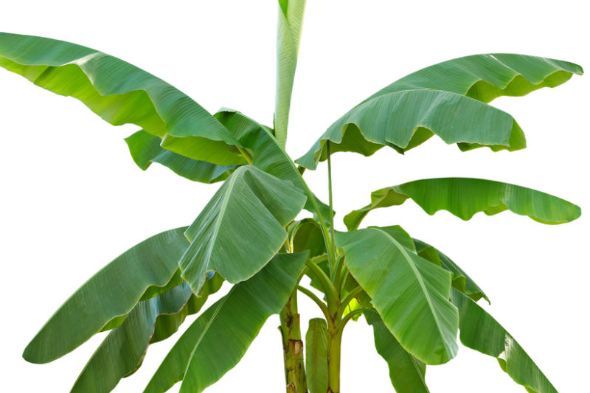
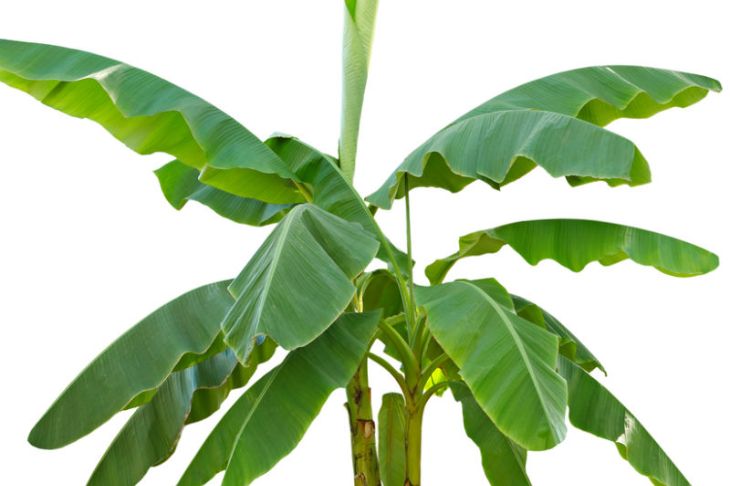
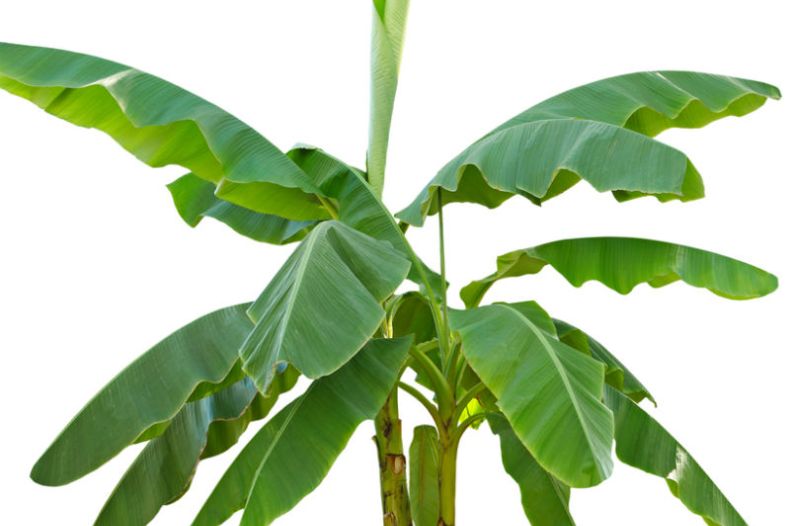
Successfully establishing a young banana plant starts with your planting site and method. Once established, it needs little assistance to grow and bear fruit; but you’ll want to make sure you give your plant the right foundation.
Before you plant, check your soil pH. Contact your local County Extension Office for information about soil testing in your area, or purchase one of our digital meters for quick and accurate results. Banana plants need a pH level of 5.5 to 6.5. They grow in wide variety of soils, as long as the soil is deep and has good drainage. They do not tolerate salty soils. Steer clear of extremely heavy or poorly drained soil.
Preparing your soil before you plant will greatly improve your plant’s performance and promote healthy, vigorous growth. It is a good idea to have your soil tested to determine if it is lacking in any essential minerals and nutrients. This can be done through your County Extension Office or with one of our digital meters.
The goal of soil preparation is to replenish vital minerals and nutrients, as well as break up and loosen any compacted soil.
Soil preparation can be done at any time that the ground is not too wet or frozen. Your trees may be planted even when temperatures are quite cool. If a hard frost is expected, it is advisable to delay planting for a while until temperatures become more moderate. Generally, as long as your soil is workable, it is fine to plant.
Your lawn can provide you with ideal organic materials such as grass clippings and shredded leaves. Not only will the grass and leaves break down to provide soil nutrients, but they will help loosen the soil as well. You can gather these in the fall with spring planting in mind.
Adding organic materials, such as our Coco-Fiber Potting Medium and compost will improve most every soil type. Organic materials bind sandy soil particles so they retain moisture and nutrients better. They also break apart clay and silt particles, so that water can infiltrate and roots can spread.
A banana plant’s rapid growth rate makes it a heavy feeder. Young plants may need as much as ¼ to ½ pound of fertilizer per month. A balanced fertilizer of 8-10-8 (NPK) is recommended.
Every plant has the future potential for disease and insect damage. Factors such as location and weather will play a part in which issues your plants encounters. If available, disease-resistant varieties are the best option for easy care; and for all types of plants, proper maintenance (such as watering, pruning, spraying, weeding, and cleanup) can help keep most insects and diseases at bay.
Symptoms are yellowing of lower leaves, including leaf blades and petioles.
Natural Control
Other Control Options
Appears as light yellowish spots on the leaves, small number will enlarge, become oval and color changes to dark brown. The center of the spot dies turning light grey surrounded by a brown ring. Severe case can kill the large parts of the leaf.
Natural Control
Appear as large brown patches covered with a crimson growth of the fungus. Fruit turns black and is shriveled.
Natural Control
Blackening of the crown tissue spreads to the pulp through the stalk resulting in rotting of the infected portion and separation of the fingers from the stalk.
Natural Control
They are the size of a pinhead and vary in color depending on the species. Cluster on stems and under leaves, sucking plant juices. Leaves then curl, thicken, yellow and die. Produce large amounts of a liquid waste called “honeydew”. Aphid sticky residue becomes growth media for sooty mold.
Control
Adult weevil is about ½ inch long with hard shell and small snout protruding from their heads. Female lays eggs in holes at the base of the plant. Weevil does damage by burrow and tunnel into the plant roots and stems.
Natural Control
Other Control Options
Pinpoint size, many different colors. Found on undersides of leaves. Sap feeding causes bronzing of leaves. Severe infestations have some silken webbing.
Natural Control
Other Control Options
Small worms that feed on roots and foliage depending on the insect. Root feeder burrow into the root system and eat the roots causing reddish-brown lesions, leaves will turn brown and wilt. Foliage feeders produce lesions on leaves.
Natural Control
Other Control Options
Pruning is an important part of proper edible plant care, and in the case of banana plants, it’s particularly easy to do.
Spraying is important to the survival of your trees. To handle potential diseases and pests, reference the guidelines below to know what you should spray, and when you should use it.
Note: Root rot from cold, wet soil is by far the biggest killer of banana plants. Avoid overwatering and cold temperatures.
Before you begin, read and follow all instructions on labels.
Watering requirements for banana plants can vary slightly depending on whether you choose to plant them in the ground or in a container on your patio or porch. These guidelines will help get your banana tree off to a great start.
Are you ready to enjoy delicious homegrown fruit? Harvest is the time to enjoy the results of your hard work. Keep a few things in consideration as you reap the fruits of your labor: the best time to pick the fruit from your tree, and how to store the fruit.
The banana plant typically produces fruit 15-18 months after planting. After the banana plant flowers and fruits, the top portion of the plant dies and another plant sprouts up from the same roots to replace the previous banana plant.
Banana stalks are found in the late summer and then winter over. The fruit begins to plump up and ripens in April. Occasionally, a stalk will form in early summer and ripen before cold weather appears.
Mature bananas are not harvested when they are yellow but while they are still green. As the fruit matures the fingers get fatter but stay green. About 4-6 weeks after the fingers have stop growing you can harvest your fruit. Bananas are ready to pick when they look well rounded between the ribs and the little flowers at the end are dry and rub off easily. It is best to cut off the whole stalk of bananas. Hang your stalk of bananas in a shady spot to finish ripening. They usually ripen from the top to the bottom going from green to yellow.