
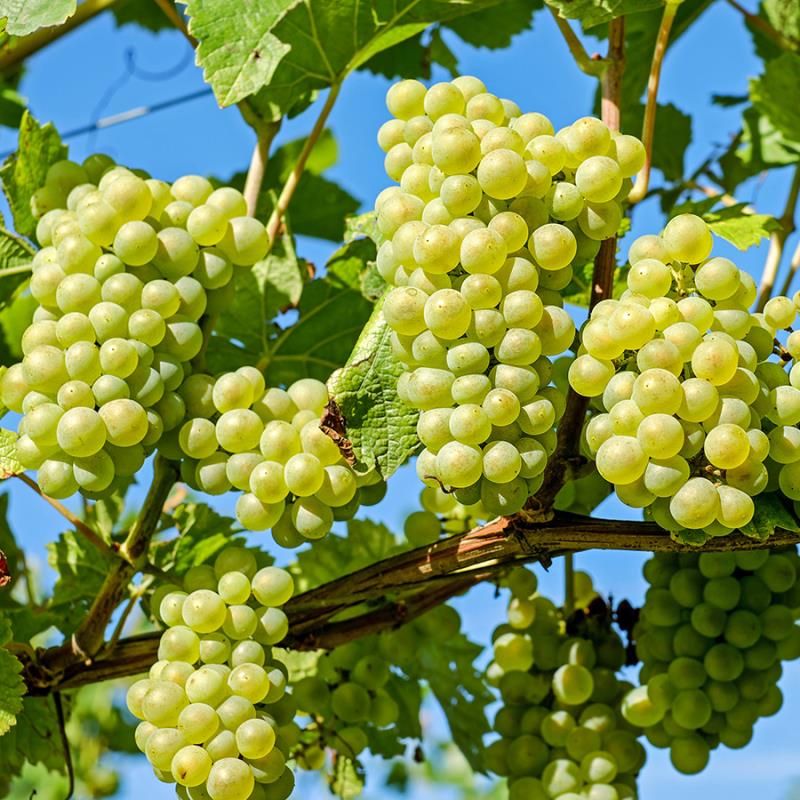
Niagara Grape Vine
Description
Niagara Grape is known as the “White Concord” — and the comparison earns its reputation. Bred in Lewiston, New York in 1872 as a Concord × Cassady cross, Niagara delivers the same vigorous growth, extreme cold hardiness, and reliably heavy production that makes Concord the most trusted American grape variety, in a large, white, slip-skin grape with the characteristic foxy, aromatic flavor that makes American-type grapes so distinctive. Big clusters of huge, seeded grapes ripen in mid-to-late September — absolutely outstanding for fresh eating, jelly, juice, and white wine where the aromatic Niagara character adds something genuinely distinctive. Self-pollinating in Zones 5–8.
The “White Concord” — Concord’s Performance in a White Grape
The Concord comparison is the most useful orientation for Niagara. Growers who know and love Concord will immediately understand what Niagara offers: the same reliable performance from a vigorous, cold-hardy vine that bears heavily in mid-to-late September with minimal fuss, in a white grape with the same slip-skin texture and aromatic foxy character that defines American-type grapes. For home orchardists who want both a red and white grape with similar care requirements, Concord and Niagara planted together is the natural pairing.
Lewiston, New York, 1872 — Concord × Cassady Cross
Niagara’s 1872 origin from Lewiston, New York — in the heart of the Lake Erie grape belt that produced Concord and other iconic American varieties — reflects the deliberate effort to create a quality white grape that matched Concord’s performance. The Concord × Cassady cross succeeded: Niagara’s Concord parentage shows in its vigor, cold hardiness, and productivity, while Cassady contributed the white fruit and the slightly different aromatic character that makes Niagara worth growing alongside rather than instead of its famous parent.
Fresh Eating, Jelly, and White Wine
Niagara’s large, juicy slip-skin grapes perform across every classic American grape application. Fresh eating straight off the vine at peak September ripeness, where the distinctive foxy aroma is at its most vibrant. Jelly and preserves where the rich aromatic character carries through beautifully. White wine and juice where Niagara’s flavor profile adds something genuinely different from vinifera varieties — an American grape character that has devoted fans.
Why Growers Choose Niagara Grape
- The "White Concord" — same vigor, hardiness, and heavy production in a white grape
- Lewiston, New York, 1872 — Concord × Cassady cross from the heart of American grape country
- Big clusters of large slip-skin grapes — impressive at harvest and outstanding to eat
- Outstanding for fresh eating, jelly, juice, and white wine — fully versatile
- Extreme cold hardiness — reliable annual September production in Zones 5–8
- Self-pollinating — productive with just one vine
Survival Guaranteed!

Since 1816, Stark Bro’s has promised to provide customers with the very best fruit trees and plants. It’s just that simple. If your trees or plants do not survive, please let us know within one year of delivery. We will send you a free one-time replacement, with a nominal shipping fee of $9.99. If the item in question is not available, we can issue you a refund. Read more about our warranty policy.
Characteristics
| Characteristic Name | Value |
|---|---|
| Bloom Color | White |
| Fruit Color | White |
| Fruit Size | Large |
| Hardiness Zone Range | 5 - 8 |
| Pollination | Self-Pollinating |
| Ripens/Harvest | Mid To Late September |
| Shade/Sun | Full Sun |
| Characteristic Name | Value |
|---|---|
| Soil Composition | Loamy |
| Soil Moisture | Well Drained |
| Soil pH Level | 5.5 - 6.5 |
| Taste | Tangy |
| Texture | Pulpy |
| Years to Bear | 2 - 4 |
Size & Spacing
Mature Size
Recommended Spacing
Zone Compatibility
Pollination
This variety is self pollinating.
Tools & Supplies
Planting & Care
Learn all about how to grow grape vines in The Growing Guide. An entire section of our website dedicated to your growing success.