Peach Trees

Peach Trees Buyer's Guide
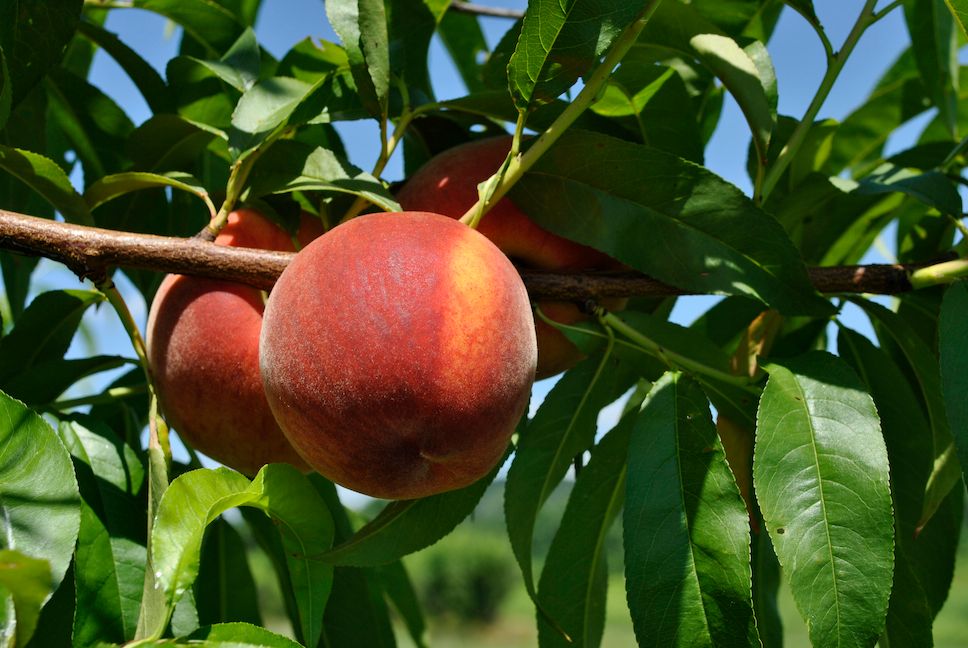
Few things in a home orchard compare to a fully tree-ripened peach — picked at peak sweetness and eaten the same day, in a way that store-bought peaches simply can’t replicate. Stark Bro’s has been selecting and growing peach trees for over 200 years, and our catalog includes heirloom varieties, Stark Bro’s exclusives, white-flesh and yellow-flesh types, and options for climates from Zone 4 through Zone 9.
Choosing the right peach tree comes down to four things: your climate, your space, your preferred harvest timing, and whether you want yellow or white flesh. The sections below will help you make the right call before you order.
Climate and Chill Hours — The Most Important Factor
Peach trees are one of the most climate-sensitive fruit trees you can grow. Before selecting a variety, confirm two things: your USDA hardiness zone falls within the variety’s zone range, and your winters provide enough chill hours.
Chill hours are the number of hours per winter where temperatures fall between 32°F and 45°F. Peach trees need a minimum number of chill hours each winter to break dormancy and fruit reliably. A tree that doesn’t receive enough chill hours will bloom erratically or fail to produce. Most standard peach varieties require 700–900 chill hours, which suits Zones 5–8. We also offer:
- Cold-Hardy Peach Trees for Zone 4 growers where winters are severe
- Low-chill varieties for Zone 9 growers in the South and West where winters are mild
Freestone vs. Clingstone
Most peach trees in our catalog produce freestone peaches — the pit separates cleanly from the flesh when you cut the fruit open. Freestone peaches are easier to eat fresh, slice, and process for canning or freezing.
Clingstone varieties have flesh that adheres to the pit. They’re less common in home orchards but can offer excellent flavor.
Yellow Flesh vs. White Flesh
Yellow-fleshed peaches are the most familiar — rich, sweet-tart flavor with the classic peach aroma. The majority of our peach varieties are yellow-fleshed.
White-Fleshed Peach Trees have milder, sweeter, less acidic flesh. They’re outstanding for fresh eating and particularly popular among growers who find standard yellow peaches too tart.
Disease-Resistant Peach Trees
Peach trees can be susceptible to bacterial spot and other foliar diseases, particularly in humid climates. Our disease-resistant peach trees have been specifically selected for natural tolerance to the most common peach diseases, giving you healthier trees with less spray management through the season.
Peach Tree Size
Dwarf Peach Trees mature to 8–10 feet tall and wide. They produce full-sized fruit and are the most practical choice for smaller yards and home gardens.
Semi-Dwarf Peach Trees mature to 12–15 feet and produce larger crops. A good choice if you have more space and want a higher-yielding tree.
Harvest Timing — Spreading the Season
Different peach varieties ripen anywhere from late June through mid-September. If you plant varieties with staggered ripening dates, you can enjoy fresh peaches across the entire summer rather than one concentrated harvest window. Check each variety’s harvest timing in the product description before ordering.
Pollination
Most peach trees are self-pollinating and will produce fruit with just one tree. For varieties that require a pollinator, we note it in the product description along with compatible variety recommendations. Even self-fertile trees often produce more fruit when a second compatible variety is nearby.
Heirloom Peach Trees
Our heirloom peach trees include varieties with long histories in American orchards — some introduced by Stark Bro’s over a century ago. These are the varieties that serious peach growers seek out for their distinctive flavor and heritage character.
Frequently Asked Questions
How long until a peach tree produces fruit?
Most peach trees begin bearing fruit within 2–4 years of planting. Some varieties may produce a small first crop in year two.
Do peach trees need a pollinator?
Most are self-pollinating and productive with just one tree. Check the individual product description to confirm whether a pollinator is recommended.
What’s the best peach tree for a small yard?
Dwarf peach trees at 8–10 feet are the most practical for smaller spaces and still produce full-sized fruit in generous quantities.
What does the Stark Bro’s 1-Year Survival Guarantee cover?
If your tree doesn’t survive within one year of delivery, we’ll send a free one-time replacement or issue a refund if the item is unavailable. See full policy details.
No results found for the specified search criteria.