
Westfield Heartnut Tree

Description
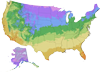
Westfield Heartnut (Juglans ailantifolia) — also called Japanese Walnut — produces one of the most satisfying nut-cracking experiences available: heart-shaped nuts that split open in two perfect halves along their natural seam, releasing the whole, intact kernel without the struggle of standard walnut cracking. The mild, sweet, bitter-free flavor makes them outstanding for fresh eating and baking, and the ornamental qualities of this 20–25-foot shade tree — large tropical-looking leaves, attractive catkins, and handsome form — make it as beautiful in the landscape as it is productive in the orchard. Adapts to poorer soils, grafted for earlier bearing, early September harvest, and cold-hardy across Zones 4–9. A pollinator is required — best pollinator: Stark® Bountiful™ Butternut.
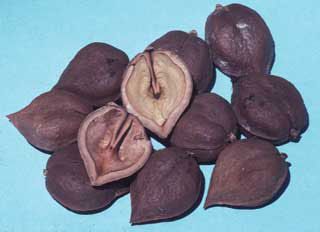
Heart-Shaped Nuts That Crack in Two Perfect Halves
The heartnut’s cracking characteristic is genuinely unlike any other walnut. Standard walnuts require nutcrackers, mallets, or rock — and even then the kernel frequently comes out in pieces. Heartnut’s distinctive heart-shaped nut splits cleanly along its natural seam into two matching halves, releasing the whole kernel intact. That clean separation means whole, attractive kernels for baking and presenting, and an effortless harvesting experience that makes processing a large crop genuinely enjoyable rather than exhausting.
Mild, Sweet, Bitter-Free Flavor
The flavor profile is as distinctive as the form. Where black walnut has a bold, assertive character and English walnut has its familiar mild richness, heartnut is sweeter, milder, and completely free of the bitterness that affects some walnut varieties. The tender, mild kernels are outstanding for fresh snacking straight from the shell and excellent in baked goods where a gentle, sweet nut character is preferred over a stronger walnut presence.
Ornamental and Shade-Worthy — Adapts to Poorer Soils
Westfield Heartnut develops into a handsome 20–25 foot shade tree with large, tropical-looking compound leaves that create a distinctive landscape presence beyond its nut production value. It adapts to poorer soils where other nut trees would struggle — an important practical advantage for sites where ideal growing conditions aren’t available — and bears in as little as 3–6 years from planting on its grafted rootstock.
Why Growers Choose Westfield Heartnut
- Heart-shaped nuts crack in two perfect halves — whole kernels, no struggle
- Mild, sweet, bitter-free flavor — outstanding for fresh eating and baking
- Also called Japanese Walnut — (Juglans ailantifolia), a distinct and underappreciated species
- Ornamental shade tree — large tropical-looking leaves, handsome 20–25-foot form
- Adapts to poorer soils — productive where other nut trees won’t perform
- Grafted, bears in 3–6 years — earlier production than seedling trees
Survival Guaranteed!

Since 1816, Stark Bro’s has promised to provide customers with the very best fruit trees and plants. It’s just that simple. If your trees or plants do not survive, please let us know within one year of delivery. We will send you a free one-time replacement, with a nominal shipping fee of $9.99. If the item in question is not available, we can issue you a refund. Read more about our warranty policy.
Characteristics
| Characteristic Name | Value |
|---|---|
| Bloom Color | Green, Yellow |
| Distance To Pollinator | 75 - 250' |
| Fruit Color | Brown |
| Fruit Size | Medium - Large |
| Hardiness Zone Range | 4 - 9 |
| Pollination | Pollinator Required |
| Ripens/Harvest | Early September Zone 5 |
| Characteristic Name | Value |
|---|---|
| Shade/Sun | Full Sun |
| Soil Composition | Loamy |
| Soil Moisture | Well Drained |
| Soil pH Level | 6.0 - 7.0 |
| Taste | Mild, Sweet |
| Texture | Firm, Solid Kernals |
| Years to Bear | 3 - 6 |
Size & Spacing
Mature Size
Recommended Spacing
Zone Compatibility
Pollination
This variety requires another one for adequate pollination.
Tools & Supplies
Planting & Care
Learn all about how to grow walnut trees in The Growing Guide. An entire section of our website dedicated to your growing success.