
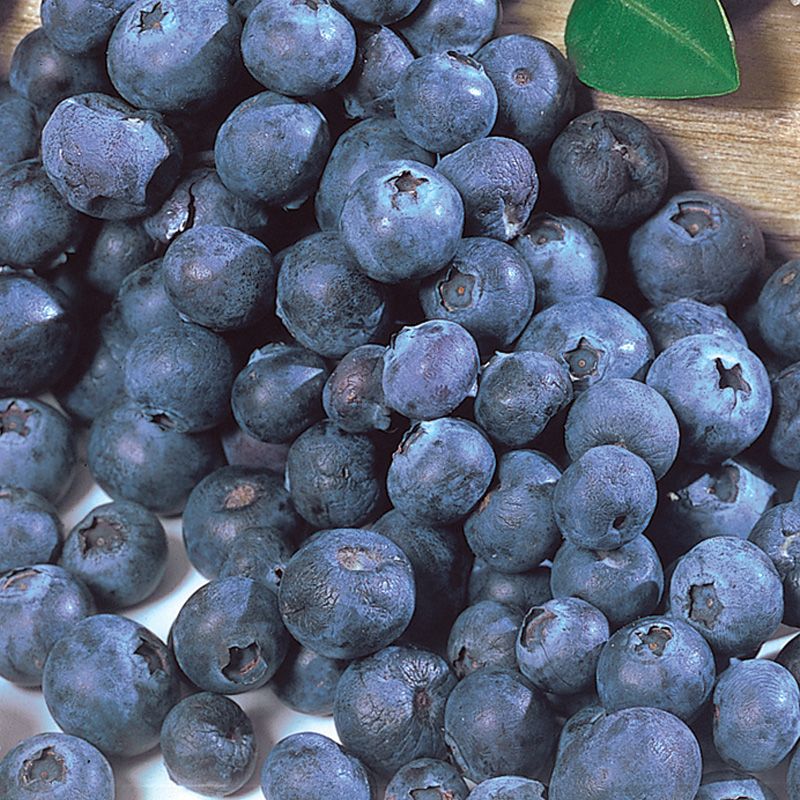
Northcountry Blueberry Plant
Description
Northcountry Blueberry delivers the flavor of wild blueberries in a cultivated plant — and that’s not a coincidence. It’s a half-high blueberry, meaning it carries genetics from both northern highbush and wild lowbush blueberries, and that wild lowbush parentage is precisely what gives it the intensely flavored, complex, sweet-tart taste that people who grew up eating wild blueberries in the north recognize immediately. The small-to-medium berries ripening in late June to early July have a depth and character that most large cultivated highbush varieties simply don’t match. Compact at 2–3 feet, mounded, and naturally tidy — an excellent choice for containers, borders, and smaller spaces. Introduced in 1986, cold-hardy in Zones 3–8. Self-pollinating, with larger crops when planted with Northblue.
Wild Blueberry Flavor — Because It’s Part Wild Blueberry
The flavor difference between Northcountry and a standard supermarket highbush blueberry comes from the plant’s genetics. Wild lowbush blueberries have smaller berries with more concentrated flavor, more anthocyanins, and a more complex sweet-tart character than large cultivated highbush varieties. Northcountry’s half-high breeding captures that wild character in a productive, manageable garden plant — delivering the flavor that makes blueberry picking in northern Maine or Michigan so memorable, from a plant that grows reliably in your own backyard.
Compact, Mounded, Naturally Tidy — 2–3 Feet
The half-high habit makes Northcountry one of the most practically sized blueberries available. At 2–3 feet tall and wide, with a naturally mounded shape that stays tidy without intensive pruning, it fits containers, low borders, and small spaces comfortably. The white spring flower clusters are attractive, and the foliage provides good fall color before the plant goes dormant for winter.
Introduced 1986 — Pair With Northblue for Maximum Production
Northcountry has been proving itself in northern home gardens since its 1986 introduction — nearly 40 years of documented cold-hardy, flavorful performance. Self-pollinating for reliable crops with just one plant, it produces meaningfully larger yields when planted near Northblue, its natural companion variety that shares the same half-high heritage and bloom timing.
Why Growers Choose Northcountry Blueberry
- Wild blueberry flavor from wild lowbush genetics — the taste that highbush varieties can’t match
- Half-high type — the best of cultivated productivity and wild flavor
- Compact 2–3 foot mounded habit — containers, borders, and small spaces
- Late June to early July ripening — early-season harvest ahead of most highbush varieties
- Cold-hardy in Zones 3–8 — introduced 1986, 40 years of proven northern performance
- Self-pollinating — plant with Northblue for larger crops
Survival Guaranteed!

Since 1816, Stark Bro’s has promised to provide customers with the very best fruit trees and plants. It’s just that simple. If your trees or plants do not survive, please let us know within one year of delivery. We will send you a free one-time replacement, with a nominal shipping fee of $9.99. If the item in question is not available, we can issue you a refund. Read more about our warranty policy.
Characteristics
| Characteristic Name | Value |
|---|---|
| Bloom Color | White |
| Bloom Time | Late |
| Chill Hours | 1000 - 1200 |
| Fruit Color | Blue |
| Fruit Size | Small - Medium |
| Hardiness Zone Range | 3 - 8 |
| Pollination | Self-Pollinating |
| Characteristic Name | Value |
|---|---|
| Ripens/Harvest | Late June - Early July |
| Shade/Sun | Full Sun |
| Soil Composition | Loamy |
| Soil Moisture | Well Drained |
| Soil pH Level | 4.5 - 5.5 |
| Texture | Tender, Fine |
| Years to Bear | 2 - 3 |
Size & Spacing
Mature Size
Recommended Spacing
Zone Compatibility
Pollination
This variety is self pollinating.
Bundle & Save!
We've combined this item with others that compliment it into money-saving assortments that make shopping easy!
Tools & Supplies
Planting & Care
Learn all about how to grow blueberry plants in The Growing Guide. An entire section of our website dedicated to your growing success.