
Wyldewood Elderberry Plant

Description
Wyldewood Elderberry stands apart from other varieties the moment it blooms — the flower heads are a full 2 inches wider than existing elderberry varieties, producing foot-wide pompoms of wonderfully lemony white blooms in June that make it one of the most visually spectacular native shrubs in flower. Those enormous flower heads translate directly into generously sized fruit clusters of small, nearly-black, sweet drupes that ripen in August and make outstanding jams, jellies, and wine. Forgiving of poor soils, partial shade tolerant, extremely cold hardy, and deer resistant — one of the most adaptable and rewarding elderberry varieties available in Zones 3–9. A pollinator is required.
Foot-Wide Pompom Blooms — 2 Inches Larger Than Other Varieties
The flower head size is Wyldewood’s most immediately distinctive quality. At a full 2 inches wider than existing elderberry varieties, the June blooms form foot-wide, flat-topped white pompoms that are genuinely spectacular in the landscape — and that fragrant, lemony scent from those enormous flower heads fills the surrounding garden during the bloom period. For gardeners who want an elderberry that earns its place ornamentally as well as productively, Wyldewood delivers a bloom display that no other elderberry variety can match.
Big Yield, Sweet Fruit — Jams, Jellies, and Wine
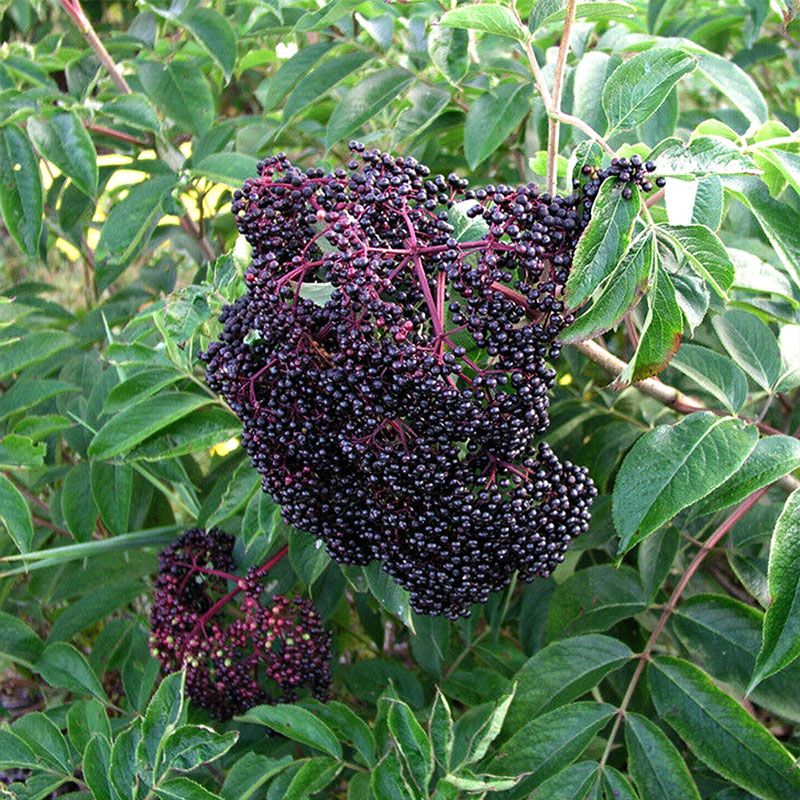
The large flower heads produce correspondingly generous fruit clusters of small, nearly-black sweet drupes with a sweet-tart flavor that’s excellent across every elderberry application. Jams and jellies showcase the sweet character; elderberry wine benefits from the generous yield that Wyldewood consistently produces; and elderberry syrup for wellness preparations is enhanced by the volume of fruit that a mature Wyldewood plant delivers each August.
Forgiving, Adaptable, and Easy to Grow
Wyldewood is notably forgiving of the growing conditions that challenge other elderberry varieties. Poor soils that would limit other plants' performance don’t significantly affect Wyldewood’s productivity. Partial shade tolerance — unusual among fruiting shrubs — opens it to sites and landscape positions that would be unsuitable for most other berry plants. Extremely cold hardy to Zone 3 and deer resistant, it requires minimal intervention once established.
Why Growers Choose Wyldewood Elderberry
- Foot-wide pompom blooms — 2 inches wider than other varieties, lemony and spectacular
- Generous fruit clusters — small sweet nearly-black drupes outstanding for jam, jelly, and wine
- Forgiving of poor soils — performs where other elderberries struggle
- Partial shade tolerant — flexible siting in challenging landscape positions
- Deer resistant — reliable in gardens where deer pressure is a concern
- Cold hardy Zone 3–9 — one of the widest zone ranges of any fruiting shrub
Note: Elderberries must be cooked before consumption. Consuming fresh elderberries can be toxic. Please ensure all berries are properly prepared before use.
Survival Guaranteed!

Since 1816, Stark Bro’s has promised to provide customers with the very best fruit trees and plants. It’s just that simple. If your trees or plants do not survive, please let us know within one year of delivery. We will send you a free one-time replacement, with a nominal shipping fee of $9.99. If the item in question is not available, we can issue you a refund. Read more about our warranty policy.
Characteristics
| Characteristic Name | Value |
|---|---|
| Bloom Color | White |
| Chill Hours | 100 - 300 |
| Fruit Color | Black |
| Fruit Size | Small |
| Hardiness Zone Range | 3 - 9 |
| Pollination | Pollinator Required |
| Ripens/Harvest | August |
| Characteristic Name | Value |
|---|---|
| Shade/Sun | Partial Shade - Full Sun |
| Soil Composition | Loamy |
| Soil Moisture | Well Drained - Average Moistness |
| Soil pH Level | 5.5 - 6.5 |
| Taste | Sweet, Tart |
| Texture | Firm, Juicy |
| Years to Bear | 2 - 3 |
Size & Spacing
Mature Size
Recommended Spacing
Zone Compatibility
Pollination
This variety requires another one for adequate pollination.
Tools & Supplies
Planting & Care
Learn all about how to grow elderberry plants in The Growing Guide. An entire section of our website dedicated to your growing success.