
Burbank™ Elephant Heart Plum Tree

Description
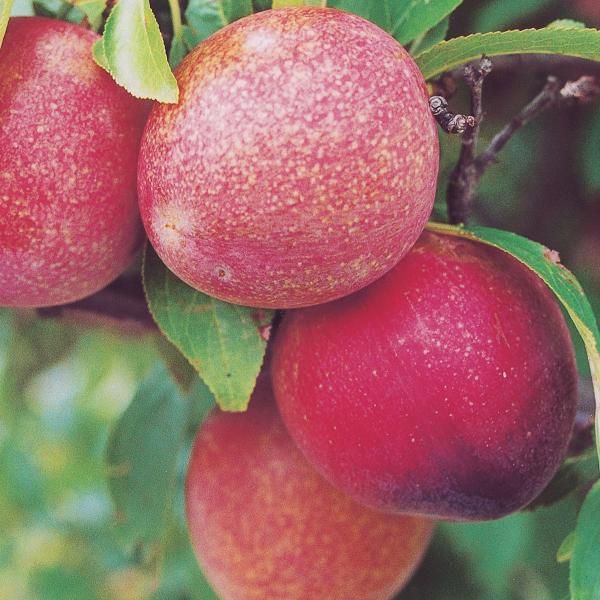
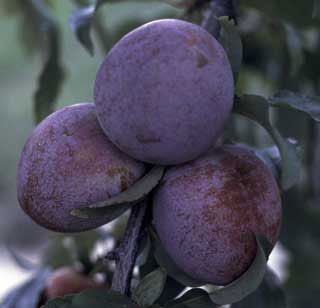
Burbank™ Elephant Heart Plum lives up to its dramatic name — baseball-sized fruit with deep red-purple skin and dark red flesh so richly colored it’s sometimes called a “blood plum,” developed by legendary plant breeder Luther Burbank and introduced to home gardeners by Stark Bro’s in 1929. The large, juicy, flavorful freestone plums are outstanding for fresh eating and canning in September, and the tree’s notable tolerance for arid and semi-arid conditions makes it a practical choice for western gardens where many stone fruit varieties struggle with heat and dry conditions. A pollinator is required. Cold hardy in Zones 5–8.
Baseball-Sized — One of the Largest Plums Available
The size of Elephant Heart plums at full September ripeness is genuinely impressive — large to extra-large fruit that earns the “elephant heart” name through sheer physical presence at harvest. The dark red-purple skin gives way to that deeply colored dark red flesh — juicy, flavorful, and rich with the sweet-tart character that makes it outstanding both fresh off the tree and preserved in jars where the deep color produces beautiful, richly hued preserves.
The “Blood Plum” — Luther Burbank’s Dramatic Creation
The blood plum nickname reflects the dark red flesh that distinguishes Elephant Heart from most other Japanese plum varieties. Luther Burbank — who developed it at his Santa Rosa, California nursery — was known for creating varieties with dramatic qualities, and Elephant Heart’s combination of exceptional size, deep coloring, and rich flavor reflects his approach to breeding: start with what’s ordinary and make it extraordinary. Stark Bro’s introduced it to American home orchardists in 1929, where it has remained a consistent choice for nearly 100 years.
Thrives in Arid and Semi-Arid Conditions — Western Garden Adapted
Elephant Heart’s tolerance for dry, hot conditions makes it particularly valuable for western gardens where summer heat and low humidity are the norm. For California, Arizona, Nevada, and other western home orchardists who want premium large plums without the irrigation demands that many stone fruit varieties require, Elephant Heart’s natural arid-climate adaptation is a meaningful practical advantage.
Why Growers Choose Burbank™ Elephant Heart Plum
- Baseball-sized fruit — one of the largest plums available for home growing
- Dark red “blood plum” flesh — richly colored, juicy, and flavorful
- Developed by Luther Burbank — introduced by Stark Bro’s in 1929
- Outstanding for fresh eating and canning — large size produces generous jar yield
- Thrives in arid and semi-arid conditions — western garden adapted
- Large freestone September harvest — easy to work with for every use
Survival Guaranteed!

Since 1816, Stark Bro’s has promised to provide customers with the very best fruit trees and plants. It’s just that simple. If your trees or plants do not survive, please let us know within one year of delivery. We will send you a free one-time replacement, with a nominal shipping fee of $9.99. If the item in question is not available, we can issue you a refund. Read more about our warranty policy.
Characteristics
| Characteristic Name | Value |
|---|---|
| Bloom Color | White |
| Bloom Time | Late |
| Chill Hours | 700 |
| Fruit Color | Red |
| Fruit Size | Large - Extra Large |
| Hardiness Zone Range | 5 - 8 |
| Pollination | Pollinator Required |
| Characteristic Name | Value |
|---|---|
| Ripens/Harvest | September |
| Shade/Sun | Full Sun |
| Soil Composition | Loamy |
| Soil Moisture | Well Drained |
| Soil pH Level | 6.0 - 7.0 |
| Texture | Firm |
| Years to Bear | 3 - 6 |
Size & Spacing
Mature Size
Recommended Spacing
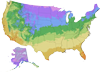
Zone Compatibility
Pollination
This variety requires another one for adequate pollination.
Tools & Supplies
Planting & Care
Learn all about how to grow plum trees in The Growing Guide. An entire section of our website dedicated to your growing success.