
Sugar Maple Tree

Description
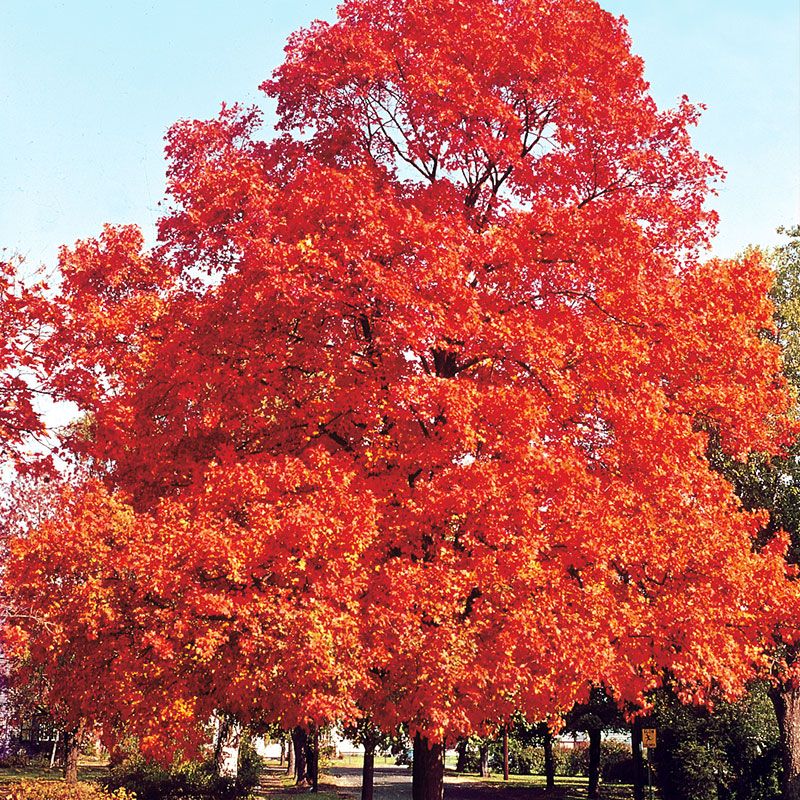
Sugar Maple (Acer saccharum) is the tree behind maple syrup and the brilliant fall color of New England and the Midwest. A cold-hardy, native hardwood shade tree with a graceful form, it gives cooling summer shade under medium-sized green leaves, then turns vibrant shades of yellow, orange, and scarlet red each autumn. Its five-lobed leaf appears on the Canadian flag, and it is the official state tree of Vermont, New York, Wisconsin, and West Virginia. Slow-growing and long-lived, often over 100 years, it is a tree you plant for the generations that follow.
The Syrup Tree
The sap of the Sugar Maple has a higher sugar concentration than other maple species, which makes it the top choice for maple syrup. Native American communities were the first to tap these trees, and the tradition continues today. Sap is typically harvested in late winter to early spring, when nighttime temperatures fall below freezing and daytime temperatures rise above. A single large tree can produce enough sap for a small batch of syrup, though multiple trees are recommended for consistent annual yields. Syrup can also be boiled further to make maple sugar.
Brilliant Fall Color and Cooling Shade
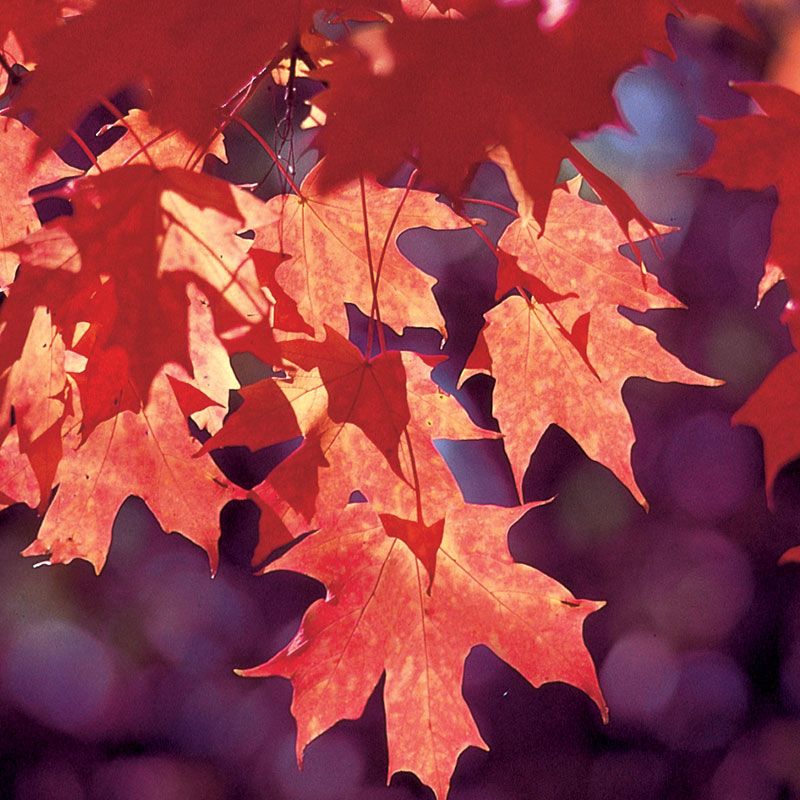
Sugar Maples are planted in municipal parks, home lawns, and large properties for their cooling summer shade and ornamental appeal. In autumn, the leaves transform into vibrant shades of yellow, orange, and scarlet red, and it is one of the iconic species responsible for the stunning autumn landscapes of New England and the Midwest.
A Valued Hardwood
Homesteaders and woodworkers appreciate Sugar Maples for more than syrup. The dense, smooth wood is prized for its strength and fine grain, and it is used for bowling lanes, bowling pins, tool handles, and sports equipment. Indoors, it is favored for furniture, countertops, and premium hardwood flooring because of its light golden color and ability to take a high polish.
A Tree for Generations
Sugar Maples are slow-growing, cold-hardy shade trees that can live over 100 years. They are best planted in spacious lawns, fields, or woodland areas where their mature height and spread can be appreciated, and they do well in full sun to partial shade. A true heirloom tree, it offers beauty and usefulness for generations to come.
Why Gardeners Choose Sugar Maple
- The maple syrup tree: sap with a higher sugar concentration than other maples
- Brilliant fall color: yellow, orange, and scarlet red, with cooling summer shade
- A valued hardwood: strong, fine-grained wood for flooring, furniture, and more
- Long-lived: slow-growing and cold-hardy, often over 100 years
- An icon: its five-lobed leaf is on the Canadian flag, and it is a state tree of four states
Survival Guaranteed!

Since 1816, Stark Bro’s has promised to provide customers with the very best fruit trees and plants. It’s just that simple. If your trees or plants do not survive, please let us know within one year of delivery. We will send you a free one-time replacement, with a nominal shipping fee of $9.99. If the item in question is not available, we can issue you a refund. Read more about our warranty policy.
Characteristics
| Characteristic Name | Value |
|---|---|
| Bloom Color | Green, Yellow |
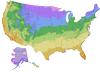
| Hardiness Zone Range | 3 - 8 |
| Shade/Sun | Partial Shade - Full Sun |
| Characteristic Name | Value |
|---|---|
| Soil Composition | Loamy |
| Soil Moisture | Well Drained |
| Soil pH Level | 5.5 - 7.3 |
Size & Spacing
Mature Size
Recommended Spacing
Zone Compatibility
Tools & Supplies
Planting & Care
Learn all about how to grow shade trees in The Growing Guide. An entire section of our website dedicated to your growing success.