
How to Grow Cherry Trees
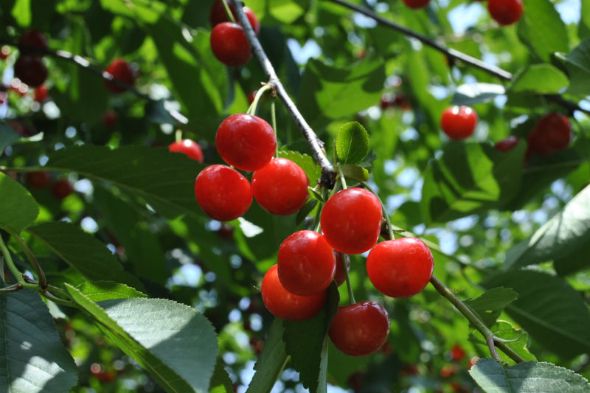
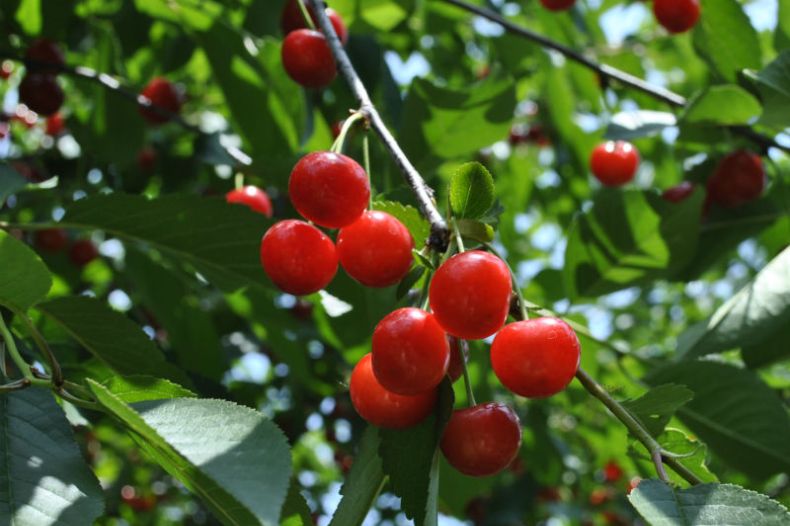
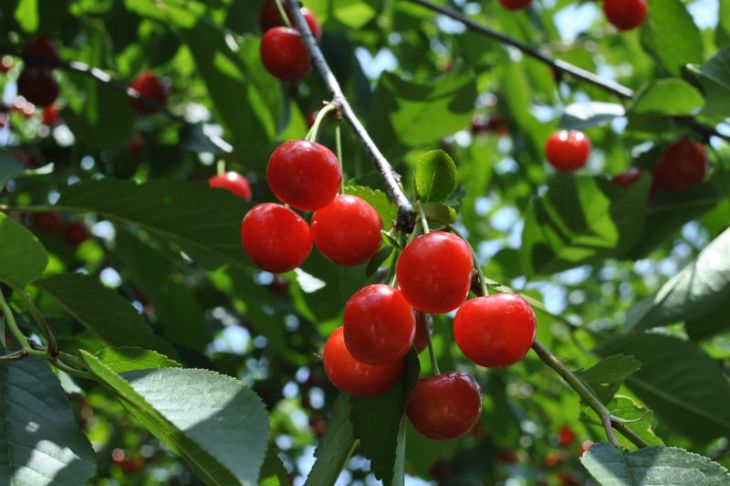
There are so many reasons for growing cherry trees: the satisfaction of picking your own homegrown fruit, creating family memories, preserving your harvest to enjoy during the cold winter months ... the list is a long one! As you probably know, there are two types of cherries:
Sweet cherries are what you usually see at the supermarket. They have a “meaty” texture, much like a firm plum, and a rich, sweet flavor and can be eaten fresh, cooked, frozen or dried. Sweet cherries grow in USDA Hardiness Zones 5 to 9 and most require pollination from another sweet cherry variety. Make sure that you plant alongside another variety with a similar bloom time for proper pollination. Bloom times can be found in each characteristic section. These cherry trees typically take about 4 to 7 years after planting to bear fruit. Sweet cherry trees will yield approximately 15-20 quarts for dwarf trees, and 30-50 quarts for semi-dwarf trees. The yield will vary based on sunlight, available nutrients, soil quality/drainage and local weather conditions during the season.
Sour cherries are most often used for cooking, especially pies and preserves. Sour cherries, also referred to as tart cherries, are noticeably smaller than sweet varieties. They grow best in USDA Hardiness Zones 4 to 8.
These cherry trees typically take 3 to 5 years to begin bearing fruit, depending upon the tree size (dwarf trees will bear sooner) and the variety. Sour cherry trees will yield approximately 15-20 quarts for dwarf trees, and 20-60 quarts for semi-dwarf trees. The yield will vary based on sunlight, available nutrients, soil quality/drainage and local weather conditions during the season.
Some important points to remember about growing cherry trees:
Perhaps the most important decision you’ll make is choosing the right location for your new cherry trees. This requires some pre-planning to give your trees the best chance for success:
- Do you understand your trees’ pollination needs?
- Is this location you’ve chosen going to have enough sun?
- Does this location have the right type of soil for your cherry trees?
- Is there enough space for the trees to mature?
Learn how to prepare your soil prior to planting. You can also learn how to plant bare-root and potted cherry trees. The instructions are very easy to follow.
After getting your cherry trees securely settled in their new home, you can address the “Care & Maintenance” phase. Learn how often and how much to water and how to prevent problems that arise from under- or over-watering.
Trees need to eat, too! Fertilizing is critical to whether your trees just survive, or thrive. Equally important is when to start/stop fertilizing. Did you know that continual feeding to keep the trees from “going hungry” can actually make them vulnerable to winter damage?
The Care & Maintenance section will also instruct you how about pruning cherry trees. Pruning keeps the tree’s canopy strong and open to light — essential to the quality and quantity of the fruit. Here, we also review common cherry-tree insect and disease issues, and explain the importance of spraying to control existing problems and help prevent future ones.
Discover great tips on all these topics and others (like harvesting cherries) in our “How To Grow Cherry Trees” series. You can navigate to any article by using the “In This Series” menu, or follow the “Next/Previous” navigation markers at the end of each article.
