
Description
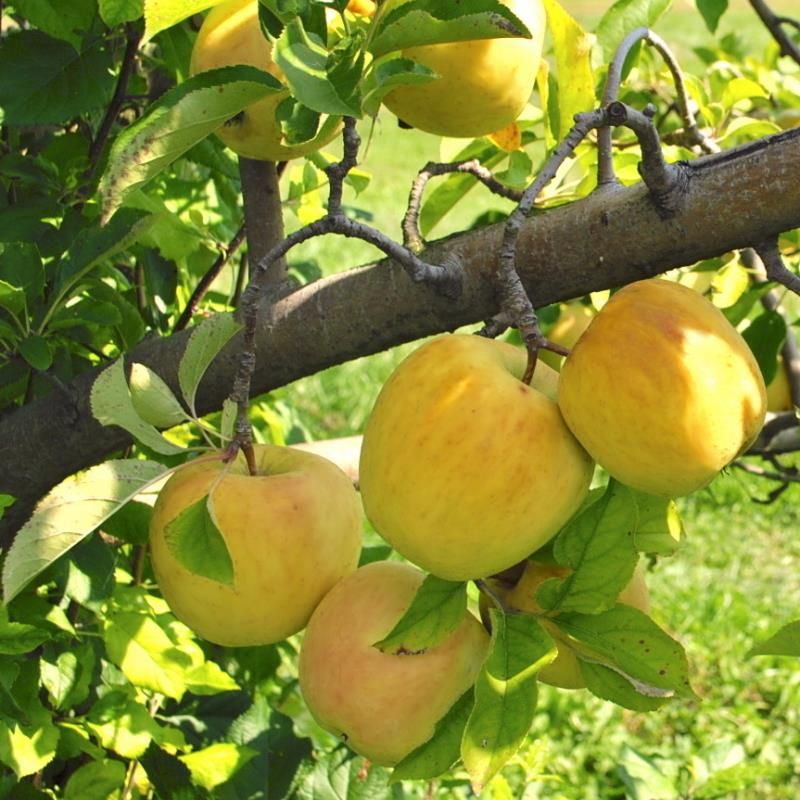
Double your harvest! Unlike tip-bearing apple trees, this tree’s spur-type nature allows fruit to form along each limb — bearing from the trunk out. This means more of your favorite Golden apples from one tree. May crop heavily, so thin fruit to avoid biennial bearing and fruit drop. Harvest a bounty of crisp, juicy apples with delectable sweetness and a hint of spice. Originates from Parker, Washington in 1961. Cold-hardy and heat-tolerant. Ripens in late September. Self-pollinating.
Characteristics
| Characteristic Name | Value |
|---|---|
| Bloom Color | White |
| Bloom Time | Mid |
| Chill Hours | 400 |
| Fruit Color | Yellow |
| Fruit Size | Large |
| Hardiness Zone Range | 4 - 9 |
| Pollination | Self-Pollinating |
| Ripens/Harvest | Late September |
| Characteristic Name | Value |
|---|---|
| Shade/Sun | Full Sun |
| Soil Composition | Loamy |
| Soil Moisture | Well Drained |
| Soil pH Level | 6.0 - 7.0 |
| Taste | Spicy, Sweet |
| Texture | Crisp, Juicy |
| Years to Bear | 2 - 5 |
Zone Compatibility
This Variety's Zone Range
4 - 9
My Hardiness Zone
6B
Based on your zip code, 43215
Change Zip Codes
The USDA hardiness zones offer a guide to varieties that will grow well in certain climates. Each zone corresponds to the minimum winter temperatures experienced in a given area. Make sure that your hardiness zone lies within the zone compatibility range of this variety before ordering.
Pollination
This variety is self pollinating.
In many cases, you may still want to plant pollinating partners to increase the size of your crops, but with self-pollinating varieties doing so is optional. Plant one of these varieties within 100' for best results.

Tools & Supplies
Planting & Care
Learn all about how to grow apple trees in The Growing Guide. An entire section of our website dedicated to your growing success.