
Description
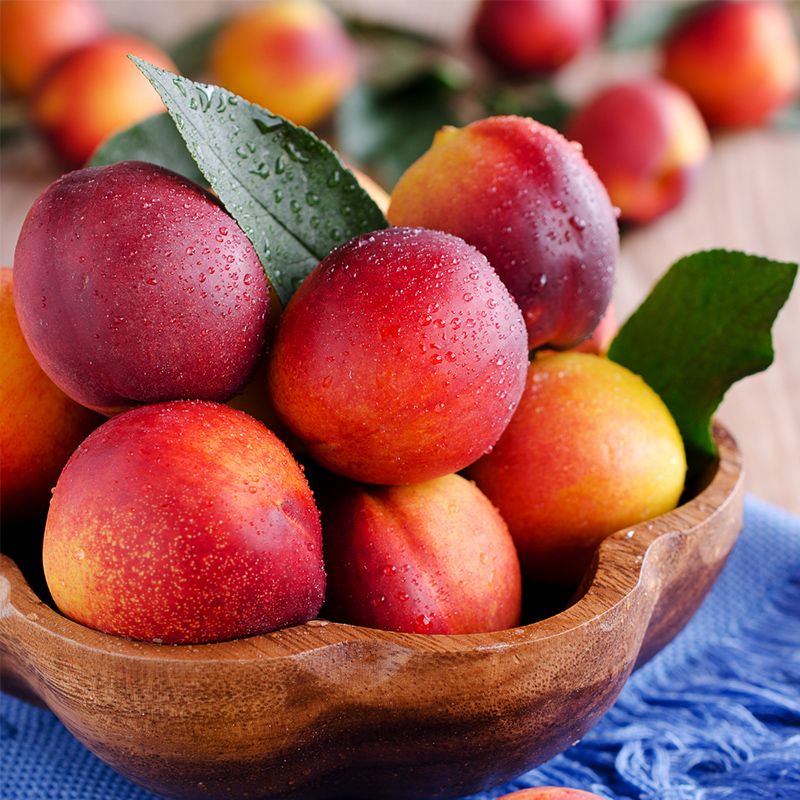
Amoore Sweet Nectarine is the first nectarine released from the University of Arkansas program with a low-acid flavor and non-melting flesh, which means the flesh stays firm and holds its shape even when fully ripe. A cross from ‘Ark,’ it produces medium-sized fruit with firm, yellow flesh of premium eating quality and a distinct, sweet nectarine flavor, with very little browning or mealiness and excellent condition in storage. Ripens early mid-season. Good resistance to bacterial spot. Self-fertile and does not require a pollinator. Bears in 2-4 years.
May be covered by USPP #26,367 or other patents.
Low-Acid, Non-Melting Flesh
Amoore Sweet is a first for the University of Arkansas program: a nectarine with a low-acid flavor and non-melting flesh. Non-melting means the flesh stays firm when ripe instead of going soft, so the fruit holds up well to slicing, handling, and storage. The result is a distinct, sweet nectarine flavor that is easy to love, with firm, yellow flesh of premium eating quality.
Firm, Yellow, and Slow to Brown
The medium-sized fruit has very little browning and mealiness, and the yellow flesh color is desirable and holds its quality. Amoore Sweet also stays in excellent condition throughout storage, so a harvest keeps its eating quality longer.
Good Resistance to Bacterial Spot
This high-quality cultivar has good resistance to bacterial spot, which makes it a great choice for areas where brown spot is a concern. It is also self-fertile and does not need a pollinator, so a single tree will produce.
Why Growers Choose Amoore Sweet Nectarine
- The first low-acid, non-melting nectarine from the University of Arkansas: a cross from 'Ark'
- Firm, yellow flesh with a distinct sweet flavor: premium eating quality
- Very little browning and mealiness: excellent condition throughout storage
- Good resistance to bacterial spot: a great choice where brown spot is a concern
- Self-fertile, bears in 2-4 years: ripens early mid-season
Characteristics
| Characteristic Name | Value |
|---|---|
| Bloom Color | Red |
| Bloom Time | Early |
| Chill Hours | 800 |
| Fruit Color | Yellow |
| Fruit Size | Medium - Large |
| Hardiness Zone Range | 5 - 8 |
| Pollination | Self-Pollinating |
| Ripens/Harvest | July |
| Characteristic Name | Value |
|---|---|
| Shade/Sun | Full Sun |
| Soil Composition | Loamy |
| Soil Moisture | Well Drained |
| Soil pH Level | 6.0 - 7.0 |
| Taste | Subacid, Sweet |
| Texture | Firm And Juicy |
| Years to Bear | 2 - 4 |
Zone Compatibility
Pollination
This variety is self pollinating.
Tools & Supplies
Planting & Care
Learn all about how to grow nectarine trees in The Growing Guide. An entire section of our website dedicated to your growing success.