
Description
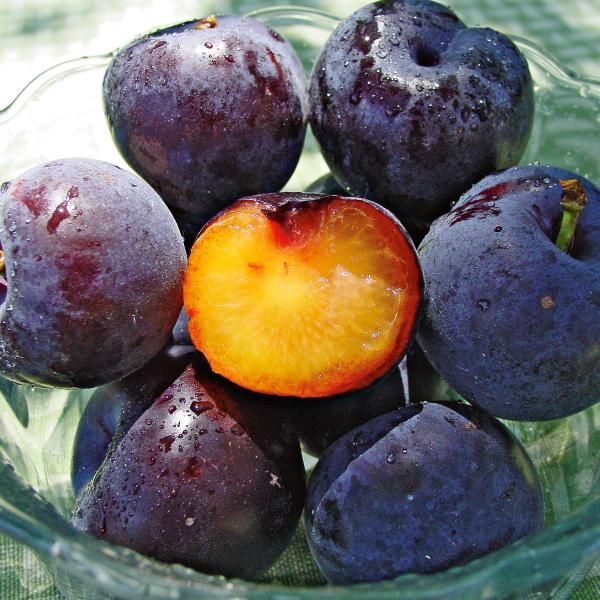
Spring Satin Plumcot contains 33% sugar — an extraordinary sweetness level that places it among the sweetest stone fruits available for home orchards. The plumcot cross between apricot and plum produces something genuinely distinctive: the size and firmness of a premium plum, the sweetness and aromatic character that comes from apricot parentage, and a striking appearance — red-black skin over golden-red flesh — that’s beautiful at harvest and genuinely unusual. Larger and firmer than other plumcot varieties, vigorous and productive, and specifically well-adapted to the humid climate of the Southeast. Originating from Byron, Georgia, introduced in 2002, clingstone, ripens early July. A Japanese plum pollinator is required.
33% Sugar — Extraordinarily Sweet Stone Fruit
The 33% sugar content is the defining quality of Spring Satin — a specific, measurable sweetness that significantly exceeds most plums and apricots individually, and reflects the best of both parents in the cross. At full early July ripeness, the sweet, juicy, aromatic flesh is genuinely exceptional for fresh eating where the extraordinary sweetness is the entire experience. Outstanding for jams and preserves where that high natural sugar content produces richly flavored, beautifully set results with less added sugar than most stone fruits require.
Red-Black Skin Over Golden-Red Flesh — Larger and Firmer Than Other Plumcots
The visual character is one of Spring Satin’s most immediately attractive qualities. The deep red-black skin at full ripeness reveals golden-red flesh inside — a warm, richly colored interior that makes it as beautiful sliced as it is satisfying to eat. The larger, firmer fruit holds up through harvest and handling better than softer plumcot varieties, making it practical for every use from fresh eating to canning and preserving.
Byron, Georgia, 2002 — Southeast Humidity Adapted
Spring Satin’s USDA origin in Byron, Georgia reflects development specifically for the warm, humid southeastern climate where many stone fruit varieties struggle with disease pressure and heat. That Southeast adaptation makes it a natural choice for home orchardists in the region where finding quality stone fruit varieties that genuinely perform has always been challenging.
Why Growers Choose Spring Satin Plumcot
- 33% sugar content — extraordinarily sweet, among the sweetest stone fruits available
- Red-black skin over golden-red flesh — beautiful inside and out
- Larger and firmer than other plumcots — practical for every fresh and kitchen use
- Well-adapted to humid Southeast climates — USDA Byron Georgia origin, introduced 2002
- Early July ripening — one of the first plumcot varieties of the season
- Japanese plum pollinator required — Starking® Delicious™ or Ozark Premier recommended
Characteristics
| Characteristic Name | Value |
|---|---|
| Bloom Color | White |
| Bloom Time | Early |
| Chill Hours | 600 |
| Fruit Color | Red |
| Fruit Size | Large |
| Hardiness Zone Range | 5 - 8 |
| Pollination | Pollinator Required |
| Ripens/Harvest | Early July |
| Characteristic Name | Value |
|---|---|
| Shade/Sun | Full Sun |
| Soil Composition | Loamy |
| Soil Moisture | Well Drained |
| Soil pH Level | 6.0 - 7.0 |
| Taste | Sweet |
| Texture | Firm |
| Years to Bear | 2 - 5 |
Zone Compatibility
Pollination
This variety requires another one for adequate pollination.

Tools & Supplies
Planting & Care
Learn all about how to grow plum trees in The Growing Guide. An entire section of our website dedicated to your growing success.