

Description
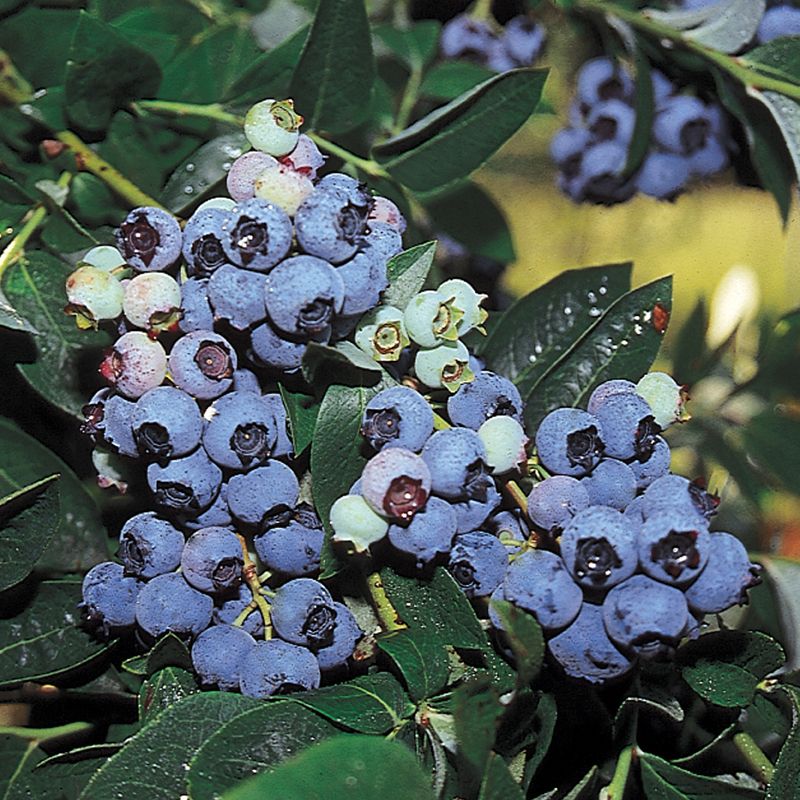
Herbert Blueberry produces some of the largest berries of any highbush variety, with fruit approaching one inch in diameter at peak late July ripeness. The flavor matches the size: perfectly sweet with a genuine tart blueberry zing that gives each berry real character rather than the flat sweetness of some modern large-fruited varieties. The large, light-blue clusters grow at branch tips in a way that makes picking particularly clean and efficient, and the late bloom timing that helps Herbert avoid damaging spring frosts makes it one of the more reliable annual producers in the highbush family. Developed in 1932, introduced in 1953, and still earning its place in serious home blueberry plantings over 70 years later. Self-pollinating, cold-hardy, bears in 2-3 years.
Nearly One-Inch Berries — Sweet With a Genuine Tart Zing
The berry size is Herbert’s most immediately striking quality, with fruit that regularly approaches one inch across at full late July ripeness. That size would be less remarkable if the flavor didn’t back it up, but Herbert combines the visual impression of an extra-large berry with a sweet-tart flavor balance that keeps each one genuinely interesting to eat. The firm texture holds up through picking and handling, and the large clusters at branch tips make harvest particularly efficient.
Late Blooming — Natural Spring Frost Avoidance
Herbert’s late bloom timing is one of its most practically valuable qualities for home gardeners in Zones 4-7 where late spring frosts are a reliable annual risk. By blooming later than earlier-ripening varieties, Herbert moves the vulnerable flowering period past the window where most damaging frost events occur, supporting more consistent annual fruit set without the protection measures that earlier-blooming varieties sometimes require.
Developed 1932, Introduced 1953 — Over 70 Years of Proven Performance
Herbert’s longevity in the catalog reflects the kind of consistent quality that decades of home gardener performance validate. A variety developed in 1932 and still actively grown and recommended over 90 years later has earned that place through annual performance that newer introductions haven’t displaced. For serious home blueberry growers who want proven heirloom quality alongside modern selections, Herbert is the standard.
Why Growers Choose Herbert Blueberry
- Nearly one-inch berries — among the largest in the highbush family at late July ripeness
- Sweet with a genuine tart zing — real flavor character, not flat sweetness
- Large light-blue clusters at branch tips — exceptionally clean and efficient to pick
- Late-blooming — natural spring frost avoidance for more reliable annual fruit set
- Developed 1932, introduced 1953 — over 70 years of proven home garden performance
- Self-pollinating, cold-hardy, bears in 2-3 years — larger crops with Duke, Elliott, or Jersey
Characteristics
| Characteristic Name | Value |
|---|---|
| Bloom Color | White |
| Bloom Time | Late |
| Fruit Color | Blue |
| Fruit Size | Large |
| Hardiness Zone Range | 4 - 7 |
| Pollination | Self-Pollinating |
| Ripens/Harvest | Late July |
| Characteristic Name | Value |
|---|---|
| Shade/Sun | Full Sun |
| Soil Composition | Loamy |
| Soil Moisture | Well Drained |
| Soil pH Level | 4.5 - 5.5 |
| Taste | Mild, Sweet |
| Texture | Firm |
| Years to Bear | 2 - 3 |
Zone Compatibility
Pollination
This variety is self pollinating.
Tools & Supplies
Planting & Care
Learn all about how to grow blueberry plants in The Growing Guide. An entire section of our website dedicated to your growing success.