
Pixwell Gooseberry Plant
Description
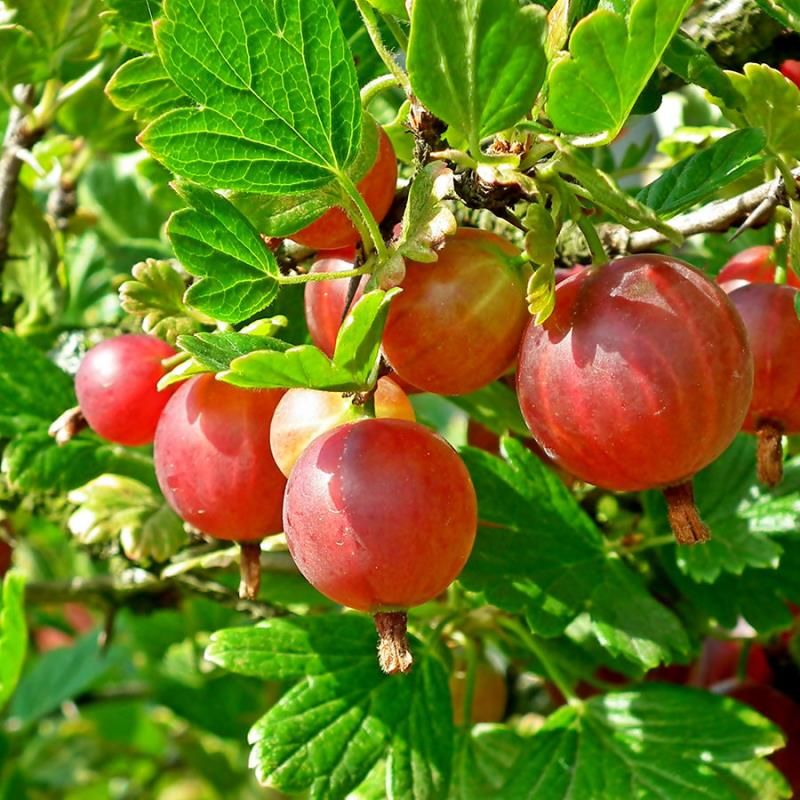
Pixwell Gooseberry is one of the most rewarding easy-care fruiting shrubs you can grow — and one of the most underappreciated. The big, oval berries start out green in spring, tart and firm, and gradually blush to soft pink at full July ripeness when the flavor transforms: sweeter, rounder, and genuinely delicious fresh off the bush. For pies and jelly, ripe gooseberries deliver one of the most distinctive and memorable flavors available from any homegrown fruit — complex, sweet-tart, and entirely their own. Cold-hardy to Zone 3, partial shade tolerant, self-pollinating, and asking almost nothing in the way of ongoing care once established. Bears in 3–4 years.
Wait for the Pink — The Color Change Tells You They’re Ready
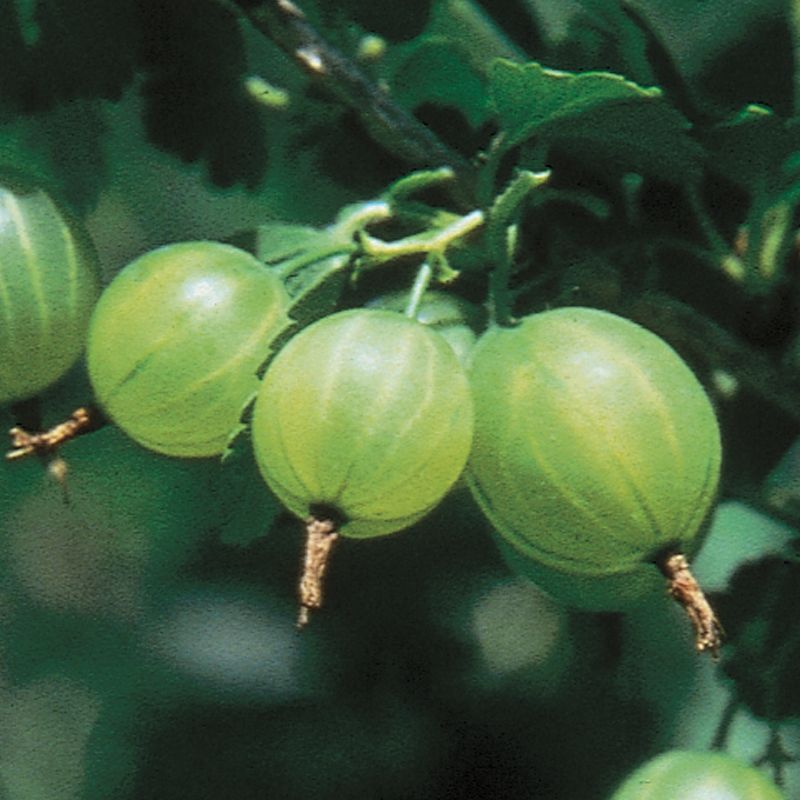
The blush-pink color change is the practical harvest guide for Pixwell. Green gooseberries are underripe and intensely tart — perfectly useful for cooking and jam where that acidity is exactly what you want, but quite puckery for fresh eating. Pink gooseberries are fully ripe and noticeably sweeter, firm but juicy, genuinely enjoyable eaten straight from the bush. Picking at pink also gives you the flexibility to use the same plant’s fruit at two different flavor stages through the season.
Outstanding for Pies and Jelly — A Classic Fruit for Classic Recipes
Gooseberry pie and gooseberry jelly have long histories in American and European kitchens, and for good reason: the berry’s natural high pectin content produces jelly that sets beautifully with minimal effort, and the flavor in a baked pie is rich, complex, and genuinely distinctive from any other fruit. Pixwell’s large berries — big for a gooseberry variety — produce substantial yields that make meaningful batches of preserves practical from a compact planting.
Almost No Care — Partial Shade Tolerant, Cold-Hardy to Zone 3
Pixwell is one of the most genuinely low-maintenance fruiting shrubs available. Once established, it produces reliably with minimal attention in full sun to partial shade — one of the very few productive fruiting shrubs that tolerates and performs in shadier garden spots where most berry plants would struggle. Cold-hardy through Zone 3 and adaptable to a range of soil conditions.
Why Growers Choose Pixwell Gooseberry
- Blush-pink at ripeness — sweeter and more complex than underripe green berries
- Outstanding for pies and jelly — high pectin, distinctive sweet-tart flavor
- Large berries for a gooseberry variety — generous yields for preserving
- Almost no care once established — one of the lowest-maintenance fruiting shrubs available
- Partial shade tolerant — productive where most berry plants won’t perform
- Cold-hardy to Zone 3 — self-pollinating, bears in 3–4 years
Survival Guaranteed!

Since 1816, Stark Bro’s has promised to provide customers with the very best fruit trees and plants. It’s just that simple. If your trees or plants do not survive, please let us know within one year of delivery. We will send you a free one-time replacement, with a nominal shipping fee of $9.99. If the item in question is not available, we can issue you a refund. Read more about our warranty policy.
Characteristics
| Characteristic Name | Value |
|---|---|
| Bloom Color | White |
| Chill Hours | 1000 |
| Fruit Color | Pink |
| Fruit Size | Small - Medium |
| Hardiness Zone Range | 3 - 8 |
| Pollination | Self-Pollinating |
| Ripens/Harvest | July Zone 6 |
| Characteristic Name | Value |
|---|---|
| Shade/Sun | Partial Shade - Full Sun |
| Soil Composition | Loamy |
| Soil Moisture | Well Drained - Average Moistness |
| Soil pH Level | 6.0 - 6.8 |
| Taste | Sweet, Tart |
| Texture | Firm |
| Years to Bear | 3 - 4 |
Size & Spacing
Mature Size
Recommended Spacing
Zone Compatibility
Pollination
This variety is self pollinating.
Tools & Supplies
Planting & Care
Learn all about how to grow gooseberry plants in The Growing Guide. An entire section of our website dedicated to your growing success.