
Rainier Sweet Cherry Tree

Description
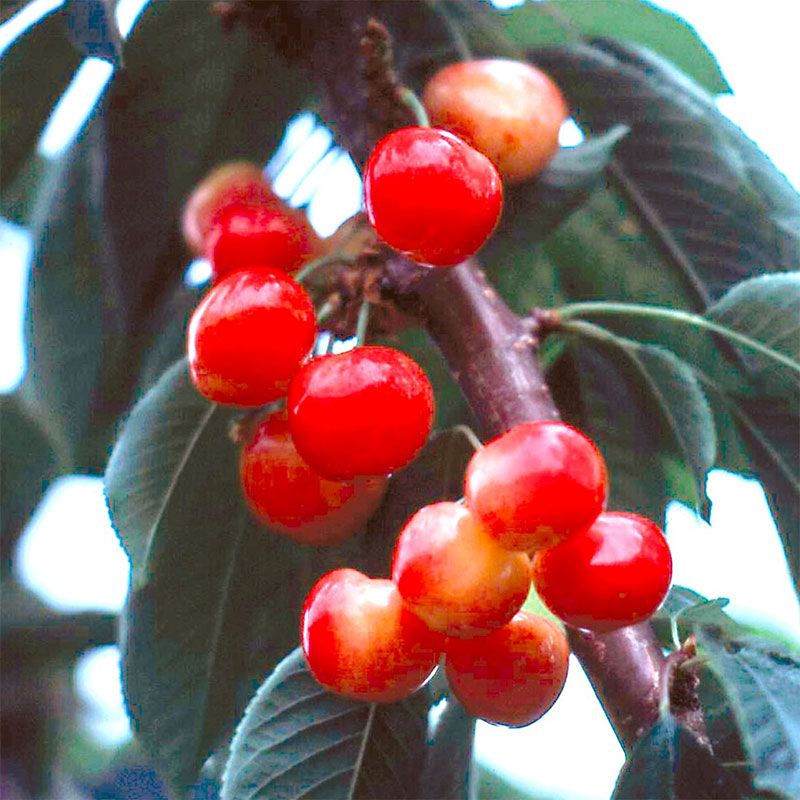
Rainier is one of the most celebrated and sought-after sweet cherry varieties in the world — a Bing × Van cross developed at Washington State University and released in 1960 that produces large, beautiful yellow-with-red-blush cherries with exceptionally sweet, firm, fine-textured flesh and a distinct, outstanding flavor that makes it the premium fresh-eating cherry by which others are judged. There’s even a practical bonus: birds are less attracted to Rainier’s yellow coloring than to the deep red of dark-fleshed varieties, reducing bird damage without netting. Bud-hardy, crack-resistant, and remarkably low at 400 chill hours — suitable for warmer climates where most sweet cherries won’t perform. A pollinator is required. Ripens late May to early June in Zones 5–8.
The Premium Sweet Cherry — Bing × Van, Washington State University, 1960
Rainier’s quality reputation is earned. Developed by Dr. Harold Fogle at Washington State University from a Bing × Van cross and released in 1960, it combined the large size and flavor depth of Bing with the firmness and crack resistance of Van to produce something that surpassed both parents. The result — now named for Mt. Rainier — is consistently ranked among the finest sweet cherries in the world, commanding premium prices in specialty markets and inspiring devoted home orchardists who want the very best from their cherry tree.
Yellow With Red Blush — Beautiful and Bird-Smart
The distinctive yellow-with-red-blush coloring is both ornamental and practical. At harvest, the large, round fruit is visually stunning — a warm golden-yellow deepening to a half-red blush that makes it one of the most beautiful cherries at the table. And because birds rely heavily on color cues when selecting fruit, Rainier’s yellow skin is less attractive to birds than the deep red of Bing and other dark cherry varieties — a genuine passive bird deterrent that most growers discover with pleasant surprise.
Only 400 Chill Hours — Sweet Cherry Quality for Warmer Climates
Most premium sweet cherry varieties require 700–1,000 chill hours — limiting them to cooler climates. Rainier’s 400-hour requirement opens sweet cherry growing to warmer regions of Zones 5–8 where Bing and other high-chill varieties fail to fruit reliably. For home growers in the warmer parts of the zone range who want genuine sweet cherry quality, that low chill requirement makes Rainier uniquely accessible.
Why Growers Choose Rainier Sweet Cherry
- One of the world’s most celebrated sweet cherry varieties — premium flavor, firm fine-textured flesh
- Bing × Van cross, Washington State University, 1960 — developed by Dr. Harold Fogle
- Yellow-with-red-blush coloring — beautiful and less attractive to birds than dark varieties
- Bud-hardy and crack-resistant — reliable production through variable spring weather
- Only 400 chill hours — sweet cherry quality accessible to warmer climates
- Outstanding for fresh eating, baking, canning, and freezing — fully versatile
Survival Guaranteed!

Since 1816, Stark Bro’s has promised to provide customers with the very best fruit trees and plants. It’s just that simple. If your trees or plants do not survive, please let us know within one year of delivery. We will send you a free one-time replacement, with a nominal shipping fee of $9.99. If the item in question is not available, we can issue you a refund. Read more about our warranty policy.
Characteristics
| Characteristic Name | Value |
|---|---|
| Bloom Color | White |
| Bloom Time | Mid |
| Chill Hours | 400 |
| Fruit Color | Yellow |
| Fruit Size | Large |
| Hardiness Zone Range | 5 - 8 |
| Pollination | Pollinator Required |
| Ripens/Harvest | Late May/early June |
| Characteristic Name | Value |
|---|---|
| Shade/Sun | Full Sun |
| Soil Composition | Loamy |
| Soil Moisture | Well Drained |
| Soil pH Level | 6.0 - 7.0 |
| Taste | Sweet |
| Texture | Firm |
| Years to Bear | 4 - 7 |
Size & Spacing
Mature Size
| Mature Size | Dimensions |
|---|---|
| Standard | 18 - 25' tall x 18 - 25' wide |
| Semi-Dwarf | 15 - 18' tall x 15 - 18' wide |
Recommended Spacing
| Mature Size | Spacing |
|---|---|
| Standard | 18 - 25' |
| Semi-Dwarf | 15 - 18' |
Zone Compatibility
Pollination
This variety requires another one for adequate pollination.
Tools & Supplies
Planting & Care
Learn all about how to grow cherry trees in The Growing Guide. An entire section of our website dedicated to your growing success.