
Crimson Night Raspberry Plant
Description
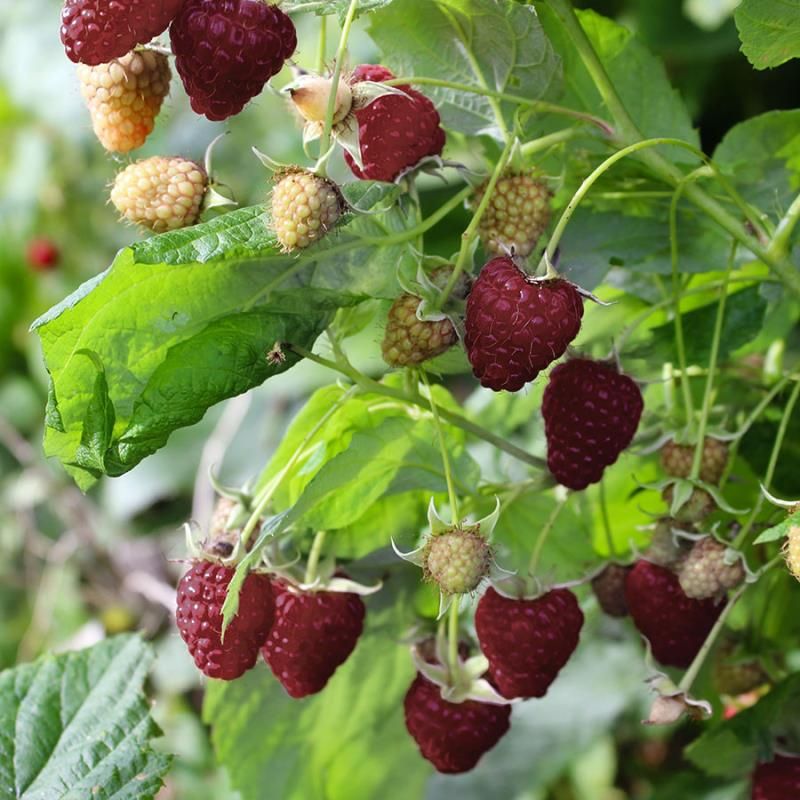
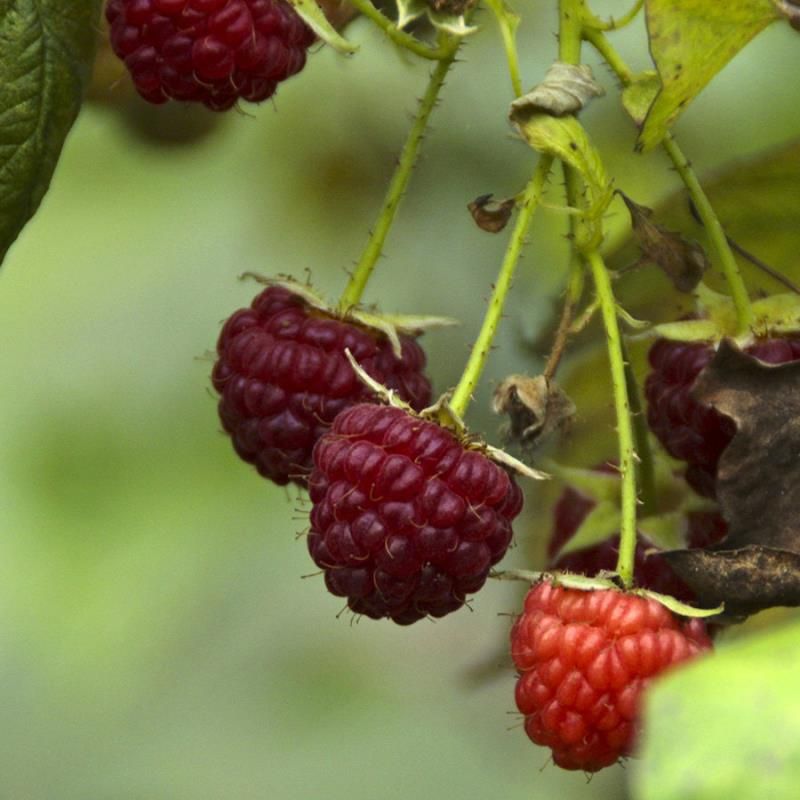
Crimson Night Raspberry earns its place in the edible landscape twice over — first through its striking red canes that provide visual interest through the dormant season, and second through two separate harvest windows: glossy, deep-red, conical berries from floricanes in late June and a second primocane crop in September. The large, firm, juicy berries have a rich red color and classic sweet-tart raspberry flavor outstanding for fresh eating, jams, freezing, and baking. Discovered in 2003 and introduced in 2012 by Cornell University, with disease resistance to phytophthora root rot and leaf issues. More compact in colder northern gardens, making it well-suited to container growing. Self-pollinating, bears in 1–2 years.
May be covered by USPP #24,949 or other patents. A licensed variety of Cornell University.
Important: Do not plant red, gold, or purple raspberries within 75–100 feet of black raspberries. Black raspberries may be more susceptible to viral diseases carried by aphids between nearby raspberry plants.
Planting note: After planting bare-root canes, prune them back to approximately 2 inches above the ground. Do not skip this step — it is crucial for encouraging the root system to send up new growth. New sprouts will emerge from the ground around the planting site from the root system, not necessarily from the original cane.
Two Harvests — Late June and September
The two-harvest habit is Crimson Night’s most practically valuable quality for home gardeners who want fresh raspberries across a longer season. The floricane crop delivers in late June when most other summer berries are just beginning. The primocane crop follows in September, extending the fresh raspberry season into early fall when most summer fruiting plants are long finished. Two distinct harvests from a single planting.
Red Canes — Ornamental Through Every Season
The vivid red canes that give Crimson Night its name provide genuine four-season ornamental value. In the dormant season after the leaves drop, the red canes create a striking visual element in the garden that standard green or brown raspberry canes don’t deliver — making it genuinely worth positioning where the winter cane color can be appreciated alongside the summer fruit.
Cornell University, 2012 — Disease Resistant and Compact
Cornell’s 2012 introduction reflects the university’s breeding priority for disease resistance and adaptability. Resistance to phytophthora root rot — the most common raspberry root disease in wet or heavy soils — supports healthy, productive plants in conditions that would stress less resistant varieties. The more compact habit in northern gardens adapts well to container growing for gardeners with limited space.
Why Growers Choose Crimson Night Raspberry
- Two harvests — late June floricane crop and September primocane crop
- Striking red ornamental canes — year-round landscape interest through every season
- Glossy deep-red large conical berries — firm, juicy, outstanding for every use
- Cornell University, introduced 2012 — disease resistant to phytophthora root rot
- More compact in colder climates — container-friendly in northern gardens
- Self-pollinating, bears in 1–2 years — productive quickly with just one planting
Survival Guaranteed!

Since 1816, Stark Bro’s has promised to provide customers with the very best fruit trees and plants. It’s just that simple. If your trees or plants do not survive, please let us know within one year of delivery. We will send you a free one-time replacement, with a nominal shipping fee of $9.99. If the item in question is not available, we can issue you a refund. Read more about our warranty policy.
Characteristics
| Characteristic Name | Value |
|---|---|
| Bloom Color | White |
| Fruit Color | Purple |
| Fruit Size | Medium - Large |
| Hardiness Zone Range | 4 - 8 |
| Pollination | Self-Pollinating |
| Ripens/Harvest | June And September |
| Characteristic Name | Value |
|---|---|
| Shade/Sun | Full Sun |
| Soil Composition | Loamy |
| Soil Moisture | Well Drained |
| Soil pH Level | 6.0 - 6.8 |
| Texture | Firm, Juicy |
| Years to Bear | 1 - 2 |
Size & Spacing
Mature Size
Recommended Spacing
Zone Compatibility
Pollination
This variety is self pollinating.
Tools & Supplies
Planting & Care
Learn all about how to grow raspberry plants in The Growing Guide. An entire section of our website dedicated to your growing success.